The following is general information introducing research findings. Results reported in studies do not mean the same outcome for any individual, and most of these studies are small or early-stage.
Summary — This field covers Japan's regenerative medicine system together with stem cell research in conditions that do not belong to other fields, such as Crohn's disease, chronic pain, depression and the side effects of cancer treatment. Japan brought its regenerative medicine act into force in 2014 and has approved stem cell products for conditions including acute graft-versus-host disease (GVHD, 2015) and spinal cord injury (2018). In complex perianal fistulas associated with Crohn's disease, a randomised, double-blind phase 3 study of allogeneic adipose-derived mesenchymal stem cells (2016) reported a difference in remission rate, leading to product approval in Europe and Japan. GVHD is one of the most advanced areas of stem cell research, with products approved in both Japan and the United States.
Overview of Japan's regenerative medicine system
Medical care using cells in Japan is managed under two systems. Regenerative medicine in which medical institutions collect and process cells is divided by risk into Class I, II and III under the Act on the Safety of Regenerative Medicine, in force since November 2014, and institutions must submit a committee-reviewed provision plan to the Ministry of Health, Labour and Welfare; care using mesenchymal stem cells is generally Class II. Regenerative medical products manufactured and sold by companies are approved under the Pharmaceuticals and Medical Devices Act, which includes a conditional, time-limited pathway allowing marketing once efficacy is presumed. Submitting a provision plan means the procedure has been followed; it does not mean the state has recognised the care as effective.
Conditions and key research results
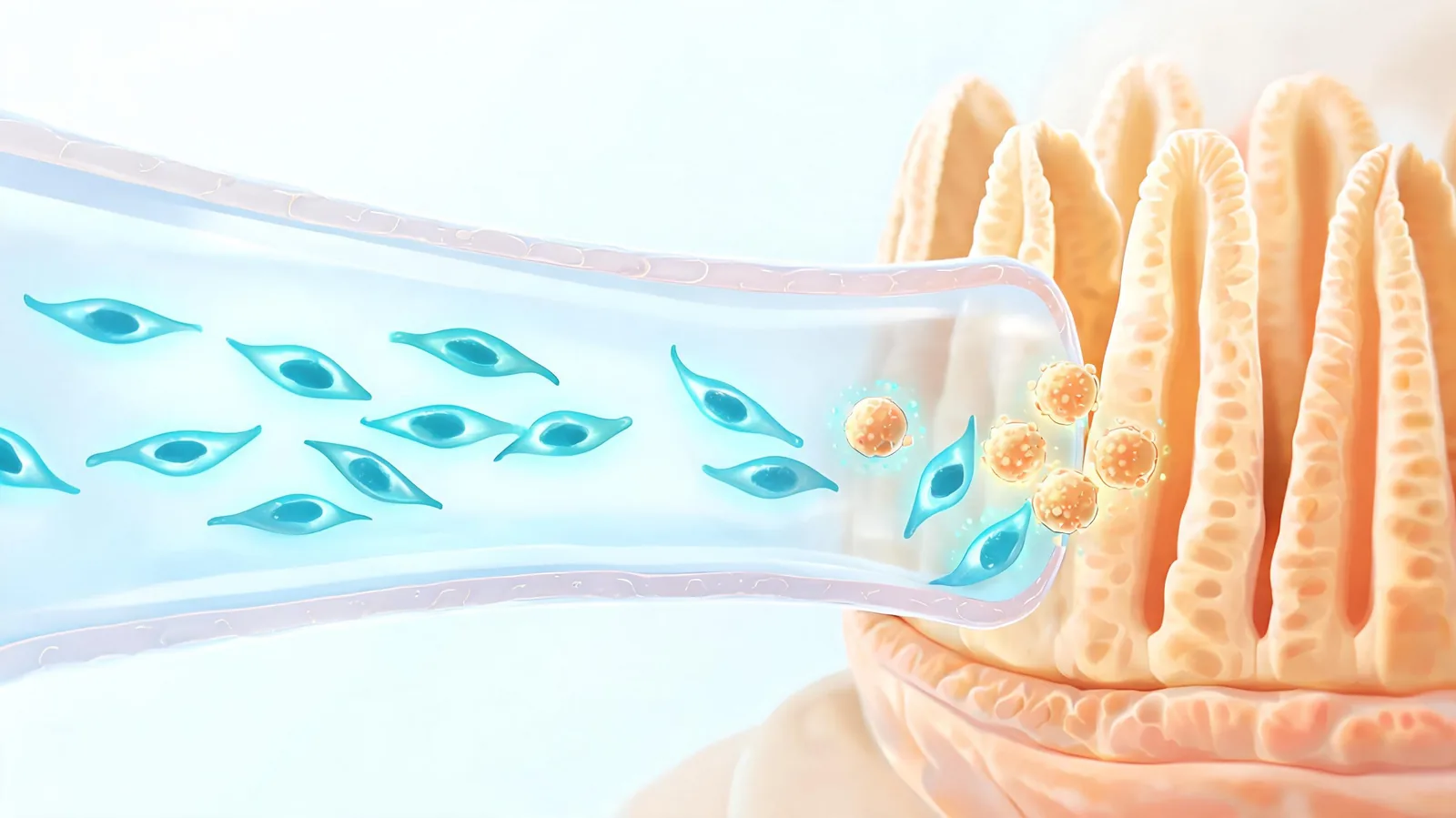
- Crohn's disease — in a randomised, double-blind phase 3 study (2016) of about 200 patients with complex perianal fistulas unresponsive to existing treatment, about half of the group receiving allogeneic adipose-derived mesenchymal stem cells around the fistula achieved combined remission at 24 weeks, more than the control group (about one-third). The product was approved in the European Union in 2018 and in Japan in 2021; the manufacturer later announced that a follow-up international phase 3 study did not meet its primary outcome.
- Side effects of cancer treatment — a European multicentre phase II study (2008) of 55 patients with severe, steroid-refractory acute GVHD reported complete responses in many patients after mesenchymal stem cells. Mesenchymal stem cell products were approved in Japan in 2015 and in the United States in 2024 (for children). A randomised, placebo-controlled study (2018) also reported improved saliva production in dry mouth after radiotherapy for head and neck cancer.
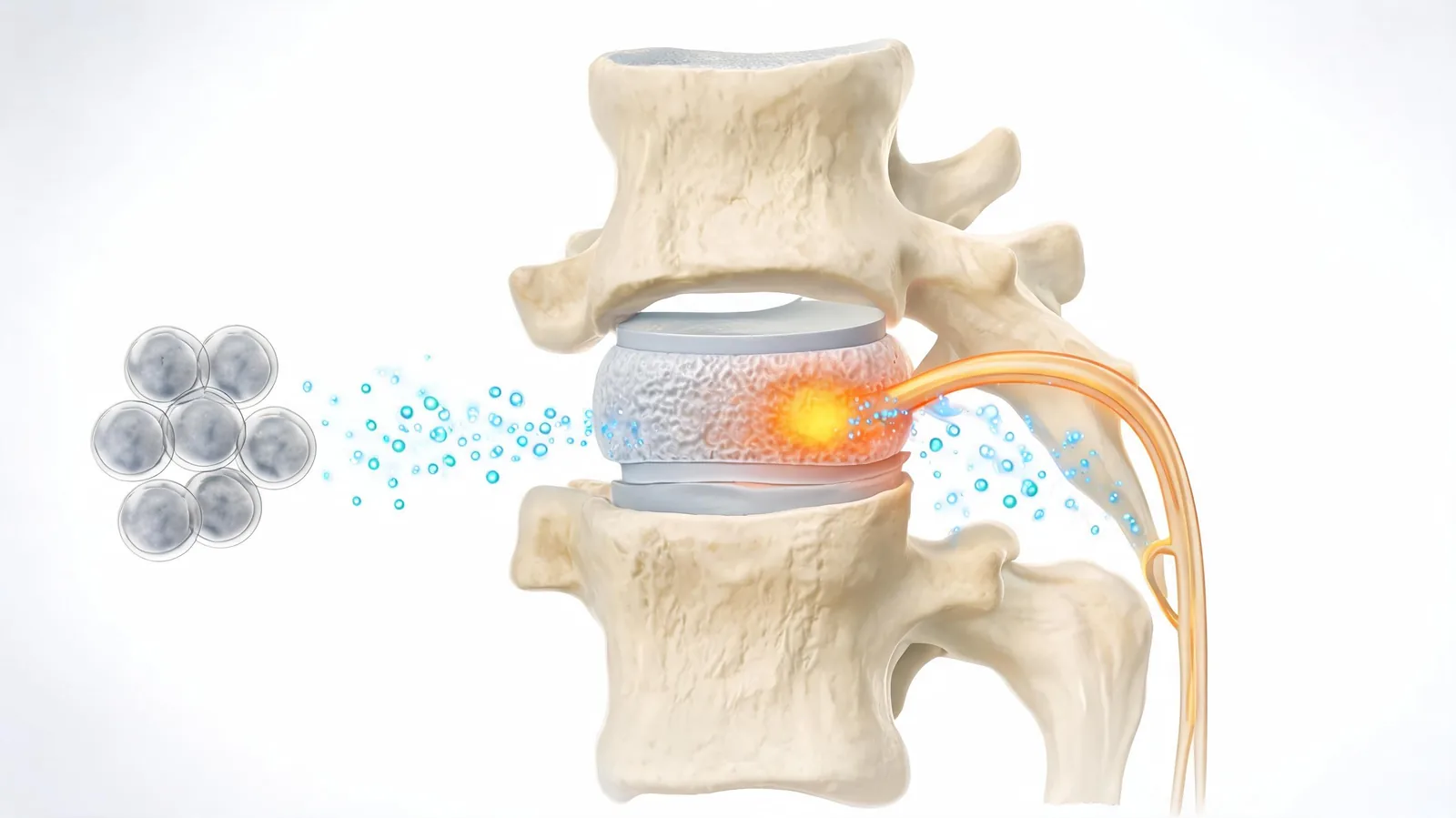
- Chronic pain — a randomised study (2021) injecting allogeneic mesenchymal precursor cells into the discs of 100 patients with degenerative disc back pain reported 36-month results.
- Depression — research based on the link between inflammation and depression exists, but mainly at the level of animal studies and hypotheses.
Background for understanding research in this field
Even under the same label of 'stem cell treatment', the level of evidence differs greatly depending on whether cells are injected locally or given intravenously, whether it is an approved product or research, and which condition was studied. For example, the Crohn's results concern perianal fistulas specifically, and the GVHD results concern a complication of haematopoietic stem cell transplantation, not cancer itself. A 2018 commentary in Nature and the ISSCR guidelines point to the problem of unproven interventions being sold without such distinctions.
Topic pages
The topics below give details on Japan's regenerative medicine system, Crohn's disease, chronic pain, depression and the side effects of cancer treatment.
Frequently asked questions
Q. Which stem cell products are approved in Japan?
Notable examples include an allogeneic mesenchymal stem cell product for acute graft-versus-host disease (GVHD, 2015), an autologous bone marrow-derived mesenchymal stem cell product for spinal cord injury (2018, conditional) and an allogeneic adipose-derived mesenchymal stem cell product for complex perianal fistulas in Crohn's disease (2021). A fuller list is on the 'Japan's Regulatory System' page.
Q. What does 'Class II' under the regenerative medicine act mean?
It is the medium-risk class covering care that uses somatic stem cells such as mesenchymal stem cells. A provision plan must be reviewed by a certified special committee and submitted to the Ministry — a safety management procedure.
Q. Can stem cells treat cancer?
The research in this field concerns side effects of cancer treatment, especially GVHD after haematopoietic stem cell transplantation and dry mouth after radiotherapy, not cancer itself. Haematopoietic stem cell transplantation for blood cancers is a separate, established treatment.
Q. Where can published information be found?
Laws on e-Gov, system and committee information from the Ministry of Health, Labour and Welfare, research registrations on jRCT, and review documents for approved products from the Pharmaceuticals and Medical Devices Agency (PMDA).
How to look up clinical trial information
Ongoing and completed clinical trials can be checked on public registries. ClinicalTrials.gov, run by the U.S. National Library of Medicine, and jRCT, run by Japan's Ministry of Health, Labour and Welfare, publish each study's purpose, eligibility criteria, intervention, outcomes, institutions and status. Results are later published as journal papers, and the reference links at the bottom of this page lead to the original information. It is also worth knowing that interventions not publicly registered are difficult to verify from outside, in both design and results.
The above summarises results reported in published papers and public-agency materials. University and institute names are given to identify research sources, not to introduce or recommend any medical institution. Reported results do not mean the same effect for everyone, and the suitability of any treatment is decided by the medical team.
References
- 再生医療等の安全性の確保等に関する法律(平成25年法律第85号)— e-Gov 法令検索 https://laws.e-gov.go.jp/law/425AC0000000085
- 厚生労働省「再生医療について」 https://www.mhlw.go.jp/stf/seisakunitsuite/bunya/kenkou_iryou/iryou/saisei_iryou/index.html
- Panés J, García-Olmo D, Van Assche G, et al. Expanded allogeneic adipose-derived mesenchymal stem cells (Cx601) for complex perianal fistulas in Crohn's disease: a phase 3 randomised, double-blind controlled trial. Lancet. 2016;388(10051):1281-1290. View on PubMed
- Le Blanc K, Frassoni F, Ball L, et al. Mesenchymal stem cells for treatment of steroid-resistant, severe, acute graft-versus-host disease: a phase II study. Lancet. 2008;371(9624):1579-1586. View on PubMed
- Amirdelfan K, Bae H, McJunkin T, et al. Allogeneic mesenchymal precursor cells treatment for chronic low back pain associated with degenerative disc disease: a prospective randomized, placebo-controlled 36-month study of safety and efficacy. Spine J. 2021;21(2):212-230. View on PubMed
- Grønhøj C, Jensen DH, Vester-Glowinski P, et al. Safety and efficacy of mesenchymal stem cells for radiation-induced xerostomia: a randomized, placebo-controlled phase 1/2 trial (MESRIX). Int J Radiat Oncol Biol Phys. 2018. View on PubMed
- Sipp D, Robey PG, Turner L. Clear up this stem-cell mess. Nature. 2018;561(7724):455-457. View on PubMed
- International Society for Stem Cell Research (ISSCR). Guidelines for Stem Cell Research and Clinical Translation (2021). https://www.isscr.org/guidelines