The following is general information introducing research findings. Results reported in studies do not mean the same outcome for any individual, and most of these studies are small or early-stage.
Summary — Research on stem cells for graft-versus-host disease (GVHD) brought encouraging news in 2026. A team from several hospitals in Barcelona, Spain, gave Wharton's jelly (umbilical cord) mesenchymal stromal cells to 49 patients with steroid-refractory GVHD and reported a day-28 overall response rate of 71.4% in Scientific Reports in June 2026. In August 2026, Mesoblast reported that adolescents and adults who received its bone marrow-derived mesenchymal stromal cell product Ryoncil as third-line therapy had 76% day-100 survival, and a registration trial in adults is now enrolling. In Japan, the allogeneic bone marrow-derived mesenchymal stem cell product Temcell HS Inj. is used for acute GVHD after hematopoietic stem cell transplantation. This article reviews overseas sources published in the last six months.
What is graft-versus-host disease (GVHD) — a complication after blood cancer treatment
For blood diseases such as leukemia, lymphoma and myelodysplastic syndromes, allogeneic hematopoietic stem cell transplantation from a donor is an important treatment. The transplanted cells rebuild blood and immunity, but the donor immune cells can sometimes treat the patient's skin, gut and liver as foreign and attack them. This is graft-versus-host disease. Acute GVHD usually appears within a few months of transplant as rash, diarrhea or jaundice, while chronic GVHD can cause long-lasting changes in the skin, eyes, mouth and lungs.
The first treatment is steroids. GVHD that does not improve with steroids is called steroid-refractory GVHD; second-line drugs such as ruxolitinib are then used, and if the response is still insufficient, further options are sought. Mesenchymal stromal cells (MSC) calm over-activated T cells and regulate inflammation, which makes them the most actively studied cell therapy at this stage. Complications of cancer treatment in general are covered on our cancer treatment side effects and stem cell research page.

49 patients in Spain — response to umbilical cord stem cells for GVHD
Published in Scientific Reports (vol. 16, 28531) on 22 June 2026, this multicentre retrospective study pooled patients treated under compassionate use in 2018–2021 at Barcelona hospitals including Vall d'Hebron (with its paediatric unit), Sant Joan de Déu and Sant Pau. It included 49 patients with steroid-refractory GVHD — 40 acute and 9 chronic — with a median age of 10 years; 28 were children under 12. Among acute cases, 61% were severe (grade III–IV).
Patients received cultured Wharton's jelly MSC intravenously at a median dose of about 1 million cells per kg, with a median of 4 infusions per patient and 197 infusions in total. The day-28 overall response rate was 71.4% (35 of 49), including 11 complete responses in which all symptoms resolved. One-year overall survival was 55.1%, and it was higher, at 65.7%, among responders. The investigators reported no infusion-related adverse events in the records covering infusion and the following four hours.
The study also measured cell potency. Patients who received high-potency batches, which suppressed immune cell proliferation by more than 70% in the laboratory, had a day-28 response rate of 81%, compared with 61% for batches with 30–70% suppression. In children under 12, the day-28 response rate with high-potency cells was 93%. The authors concluded that well-defined quality criteria for cell products can support more consistent results.
Ryoncil in the United States — bone marrow-derived stem cells for GVHD in adults
Ryoncil (remestemcel-L), the first mesenchymal stromal cell therapy approved by the US Food and Drug Administration (FDA), is used for steroid-refractory acute GVHD in children aged 2 months and older. According to Mesoblast's annual results release of 27 August 2026, an analysis presented at the February 2026 Tandem Meetings of ASTCT and CIBMTR showed 76% day-100 survival in adolescents and adults who received Ryoncil as third-line therapy after ruxolitinib or other second-line agents had failed. The company described this as higher than the 20–30% historically reported for this population.
Mesoblast has started a registration trial in adults with grade III–IV disease, using Ryoncil with ruxolitinib as part of second-line therapy, and expects up to 40 US centres to be active in 2026. In paediatric care, more than 50 transplant centres have started using the product, and the median time from patient identification to treatment has fallen from 29 days at launch to 8 days, according to the company. Earlier treatment was highlighted as important for outcomes.
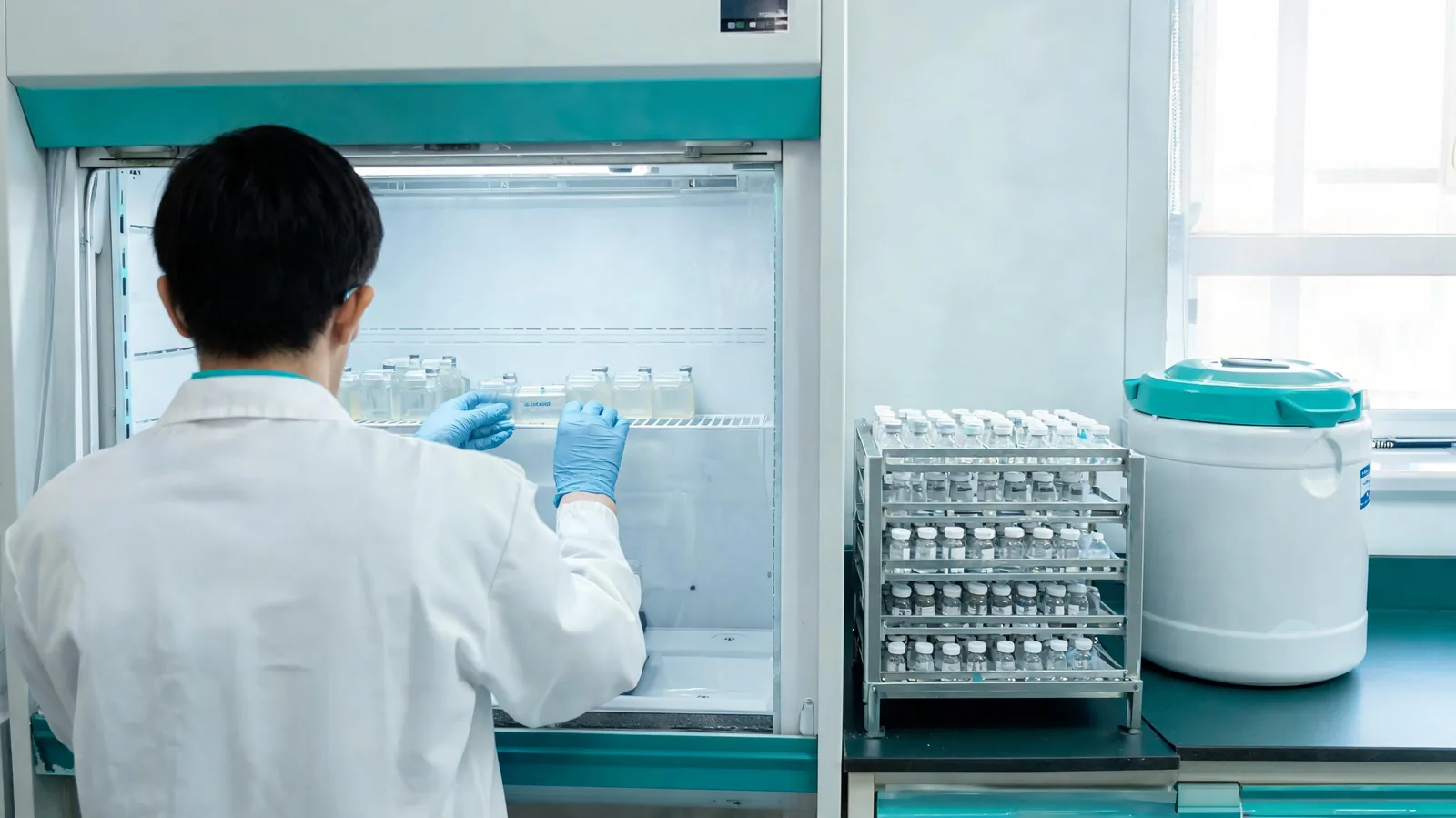
Japan's stem cell product for GVHD — Temcell HS Inj.
In Japan, JCR Pharmaceuticals' Temcell HS Inj. is used as a regenerative medicine product. Its generic name is human (allogeneic) bone marrow-derived mesenchymal stem cells, and its indication is acute GVHD after hematopoietic stem cell transplantation. It is given as a slow intravenous infusion of 2 million cells per kg twice weekly for 4 weeks, with an optional further 4 weeks of weekly dosing depending on symptoms. In a filing published in May 2026, JCR reported sales of 2,212 million yen for April–December 2025, showing steady use in Japanese transplant care. Japan's regenerative medicine framework is described in our Japan regenerative medicine timeline article.
Study stage and how to read the results
The Spanish study is a retrospective case series without a control group, and Mesoblast's adult data come from expanded-access patients presented at a congress. Both are best read as results that support the randomised trials now under way. A reported response is not the same as proof that every patient will respond, and registration trials in more adult patients are continuing. For intravenous MSC research in another condition, see our article on intravenous bone marrow stem cells for stroke.
Frequently asked questions
Which patients are studied for stem cell treatment of GVHD?
Most reported studies involved acute GVHD that did not respond adequately to steroids, and the Spanish study also included 9 patients with chronic GVHD. Whether it suits an individual is decided by the transplant team based on GVHD grade and overall condition.
How do bone marrow-derived and umbilical cord-derived MSC differ?
Ryoncil and Temcell HS Inj. are made from the bone marrow of healthy donors, while the cells in the Spanish study came from umbilical cord Wharton's jelly. Both regulate immune responses, and this study emphasised that each product's quality criteria and potency may matter more than the cell source.
Do stem cells treat the blood cancer itself?
No. The mesenchymal stromal cells discussed here are studied to manage an immune complication after transplant, not to treat leukemia or lymphoma themselves. They are different from the hematopoietic stem cells used in transplantation.
Conclusion
Overseas sources in 2026 show stem cell research for GVHD moving forward. In Spain, a 49-patient study with many severely ill children reported a 71.4% response rate; in the US, 76% day-100 survival was reported in adolescents and adults treated third-line, and a registration trial in adults has begun. In Japan, a bone marrow-derived mesenchymal stem cell product is used in transplant care, widening the options for patients and families facing post-transplant complications. We will update this article as new trial results appear. The suitability and risks of any treatment are judged by the treating medical team.
This article summarises published papers and corporate and public documents. Names of universities, hospitals and companies identify sources of research and are not an introduction or recommendation of any medical institution or product. Suitability of treatment is judged by the treating medical team.
Regulation & Other (Crohn's, Pain, etc.) →
References
- Torrents S, García-Buendía A, Codinach M, Rodríguez L, Marsal Ricomà J, del Trabazo del Castillo M, et al. Use of mesenchymal stromal cells derived from the Wharton's jelly of human umbilical cord for treating patients with steroid-resistant graft versus host disease: predicting clinical response by a validated immunopotency assay. Sci Rep. 2026;16:28531 (published 2026-06-22). https://www.nature.com/articles/s41598-026-58936-7
- Mesoblast Limited. Mesoblast Reports Substantial Revenue Growth to US$120M (Ryoncil adult SR-aGvHD data, Tandem Meetings 2026, Kurtzberg J et al.). GlobeNewswire, 2026-08-27. https://www.globenewswire.com/news-release/2026/08/27/3351749/0/en/mesoblast-reports-substantial-revenue-growth-to-us-120m.html
- JCRファーマ株式会社. 2026年3月期 第3四半期決算短信〔日本基準〕(連結)の一部訂正(テムセルHS注 売上高). 2026-05-13. https://www2.jpx.co.jp/disc/45520/140120260513530211.pdf
- 日経メディカル処方薬事典. テムセルHS注(ヒト(同種)骨髄由来間葉系幹細胞)効能・効果・用法・用量. https://medical.nikkeibp.co.jp/inc/all/drugdic/prd/49/4900400X1021.html
FTH Co., Ltd. (FTH) is not a medical institution. We provide overseas medical information guidance and translation and interpretation support for medical materials, and does not provide medical consultation, diagnosis, treatment or medical judgements.