The following is general information introducing research findings. Results reported in studies do not mean the same outcome for any individual, and most of these studies are small or early-stage.
Summary — The spinal cord and joints are leading examples of stem cell regenerative medicine entering the regulatory system. In Japan, an autologous bone marrow-derived mesenchymal stem cell product based on Sapporo Medical University research received conditional, time-limited approval for spinal cord injury in 2018, and knee treatment using mesenchymal stem cells is regulated as Class II regenerative medicine. In knee osteoarthritis, a phase I/II study injecting adipose-derived mesenchymal stem cells into the joint (2014) reported improved pain and function and changes in cartilage measures in the high-dose group.
Conditions in this field
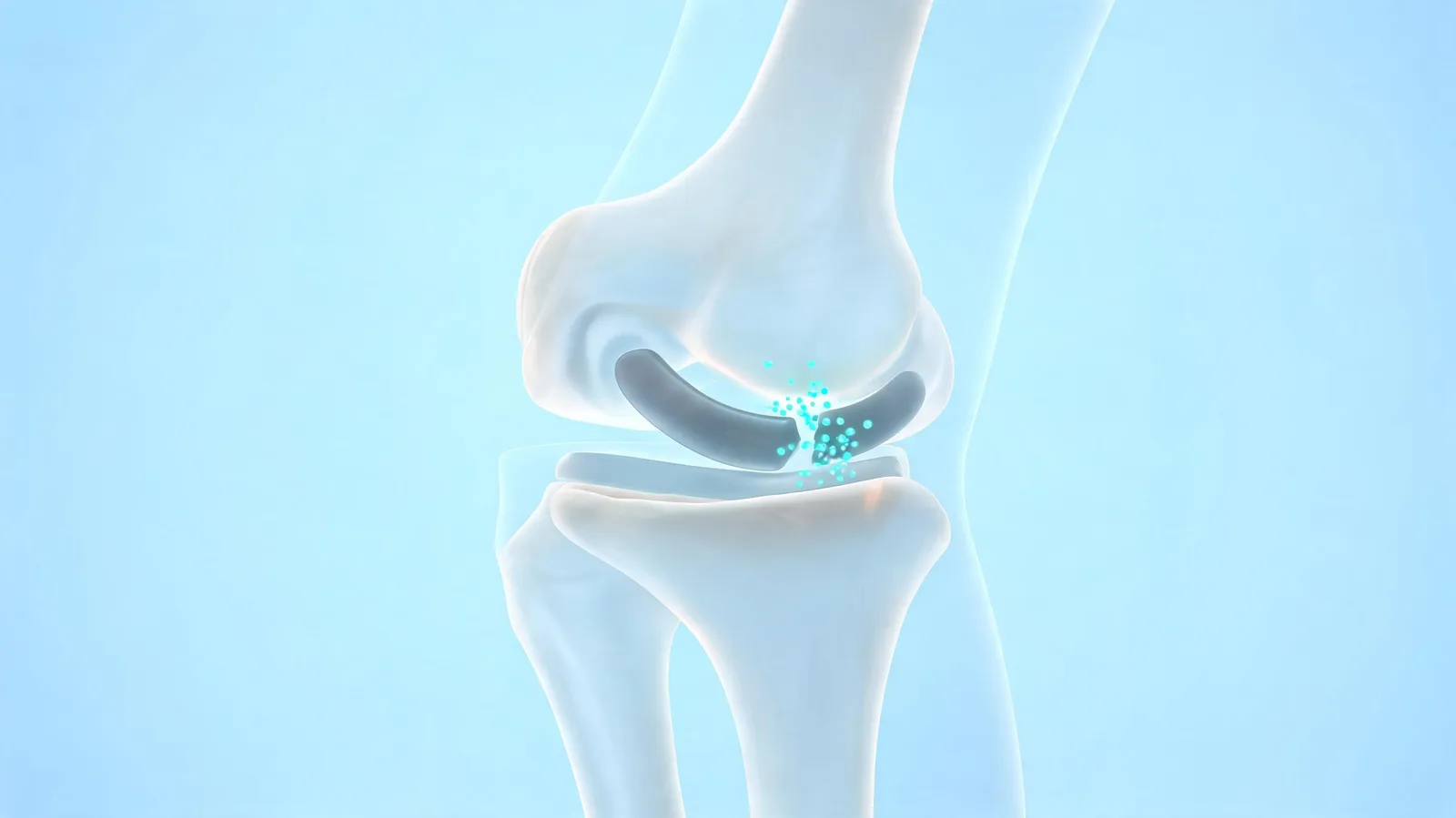
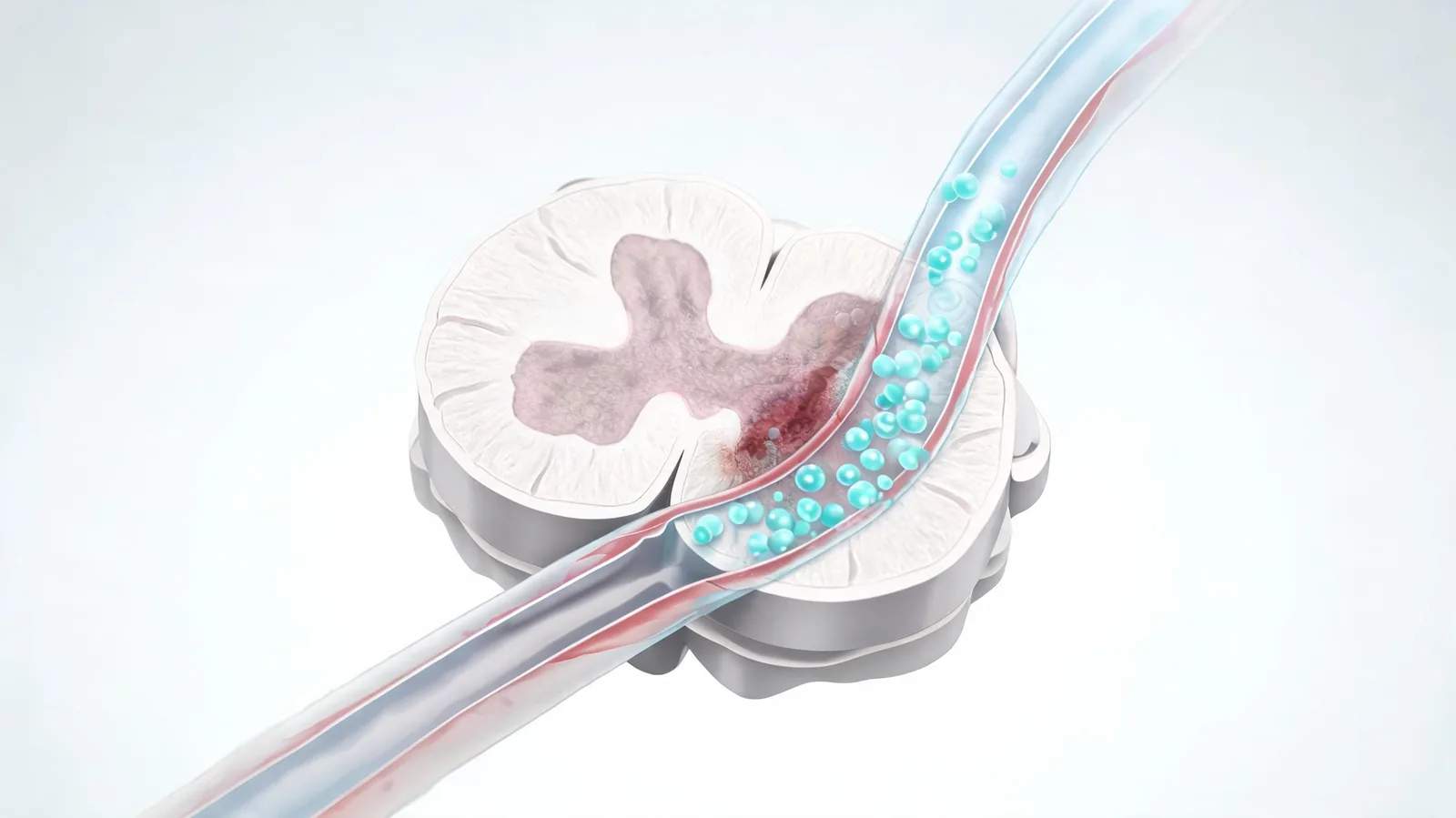
This field includes spinal cord injury and the knee joint (knee osteoarthritis). The two tissues differ but share one feature: nerve cells of the spinal cord and joint cartilage both have very limited ability to repair themselves, so once damaged they are hard to restore with existing treatments. This is why research using cells to support recovery of damaged tissue has continued steadily.
Cells studied and how they are given
- Spinal cord injury — mainly mesenchymal stem cells from the patient's own bone marrow, given intravenously relatively early after injury. This builds on the hypothesis that secreted factors reduce inflammation and swelling at the injury and protect surviving nerves, limiting the secondary injury that develops over hours to weeks. In Japan, clinical research transplanting iPS cell-derived neural progenitor cells has also been carried out.
- Knee joint — mesenchymal stem cells from the patient's own fat or bone marrow are injected directly into the joint. Early hopes that the cells would become cartilage have given way to a common view that indirect effects — reducing joint inflammation and protecting cartilage cells through secreted factors — matter more.
Key research results
- Spinal cord injury — the Sapporo Medical University team developed a technique for culturing mesenchymal stem cells in the patient's own serum instead of bovine serum, and a product based on it received conditional, time-limited approval from Japan's Ministry of Health, Labour and Welfare in December 2018. In a case series of 13 patients, the team reported improvements on the ASIA Impairment Scale and in motor and sensory scores after administration (2021). The same technology had earlier been used in stroke research (2011).
- Knee joint — a Korean phase I/II study (2014, 18 patients) reported improved knee function and pain scores, reduced cartilage defect size on MRI, and findings related to cartilage regeneration on arthroscopy and tissue examination in the high-dose group.
- Related area: degenerative disc back pain — a randomised study injecting allogeneic mesenchymal precursor cells into the disc (2021, 100 patients) reported 36-month results.
Japan's regulatory background
The spinal cord injury product was approved under the conditional, time-limited pathway of the Pharmaceuticals and Medical Devices Act, which allows marketing once safety is confirmed and efficacy is presumed, and requires efficacy to be confirmed within a set period. A 2019 news article in Nature reported scientists' concerns about approval based on small, uncontrolled data. Stem cell treatment for the knee, by contrast, is Class II regenerative medicine under the regenerative medicine act, provided after medical institutions submit a committee-reviewed provision plan to the Ministry. This means the procedure has been followed; it does not mean the state has recognised the treatment as effective.
Background for understanding research in this field
After spinal cord injury, especially incomplete injury, spontaneous recovery can occur in the first months, and knee pain shows large placebo effects and fluctuation over time. Controlled studies are therefore especially important in both areas.
Condition pages
The topics below give details for spinal cord injury and the knee: overview, standard care, research approaches, reported results and how outcomes are measured.
Frequently asked questions
Q. Can anyone use Japan's stem cell product for spinal cord injury?
The conditionally approved product is to be used at medical institutions meeting set conditions, for patients who meet eligibility criteria such as timing and severity of injury. Suitability is decided by the medical team.
Q. Does conditional, time-limited approval mean efficacy has been confirmed?
It permits marketing once safety is confirmed and efficacy is 'presumed', and efficacy must be confirmed again within a set period. Its level of evidence differs from standard approval.
Q. How is stem cell treatment for the knee provided in Japan?
It is classified as Class II regenerative medicine under the regenerative medicine act and is provided, mostly as self-pay care, by institutions that have completed committee review and submission to the Ministry. This means the procedure was followed, not that efficacy was recognised.
Q. Does knee cartilage grow back?
The 2014 study reported smaller cartilage defects in the high-dose group, but it was small and uncontrolled. Structural recovery of cartilage has not been consistently confirmed.
Q. Where can information on approved products be checked?
Review reports and package inserts published by Japan's Pharmaceuticals and Medical Devices Agency (PMDA) show the basis and conditions of approval.
How to look up clinical trial information
Ongoing and completed clinical trials can be checked on public registries. ClinicalTrials.gov, run by the U.S. National Library of Medicine, and jRCT, run by Japan's Ministry of Health, Labour and Welfare, publish each study's purpose, eligibility criteria, intervention, outcomes, institutions and status. Results are later published as journal papers, and the reference links at the bottom of this page lead to the original information. It is also worth knowing that interventions not publicly registered are difficult to verify from outside, in both design and results.
The above summarises results reported in published papers and public-agency materials. University and institute names are given to identify research sources, not to introduce or recommend any medical institution. Reported results do not mean the same effect for everyone, and the suitability of any treatment is decided by the medical team.
References
- Honmou O, Yamashita T, Morita T, et al. Intravenous infusion of auto serum-expanded autologous mesenchymal stem cells in spinal cord injury patients: 13 case series. Clin Neurol Neurosurg. 2021;203:106565. View on PubMed
- Cyranoski D. Japan's approval of stem-cell treatment for spinal-cord injury concerns scientists. Nature. 2019;565(7741):544-545. View on PubMed
- Honmou O, Houkin K, Matsunaga T, et al. Intravenous administration of auto serum-expanded autologous mesenchymal stem cells in stroke. Brain. 2011;134(Pt 6):1790-1807. View on PubMed
- Jo CH, Lee YG, Shin WH, et al. Intra-articular injection of mesenchymal stem cells for the treatment of osteoarthritis of the knee: a proof-of-concept clinical trial. Stem Cells. 2014;32(5):1254-1266. View on PubMed
- Amirdelfan K, Bae H, McJunkin T, et al. Allogeneic mesenchymal precursor cells treatment for chronic low back pain associated with degenerative disc disease: a prospective randomized, placebo-controlled 36-month study of safety and efficacy. Spine J. 2021;21(2):212-230. View on PubMed
- 再生医療等の安全性の確保等に関する法律(平成25年法律第85号)— e-Gov 法令検索 https://laws.e-gov.go.jp/law/425AC0000000085