The following is general information introducing research findings. Results reported in studies do not mean the same outcome for any individual, and most of these studies are small or early-stage.
Summary — Two very different kinds of stem cell research have been carried out in multiple sclerosis. One gives mesenchymal stem cells intravenously: a phase 2a study of 10 patients with secondary progressive disease (2012) reported changes in visual function measures. The other is autologous haematopoietic stem cell transplantation, which suppresses the immune system with chemotherapy and rebuilds it from the patient's own blood stem cells: a randomised study of 110 patients with relapsing-remitting disease (2019) reported less disability progression than in patients who continued drug therapy.
What is multiple sclerosis?
Multiple sclerosis is an autoimmune disease in which the immune system attacks myelin, the sheath around nerve fibres in the brain, spinal cord and optic nerves, disrupting nerve signals. Depending on where damage occurs, symptoms include reduced vision or visual field changes, numbness and tingling in the limbs, weakness, balance problems, fatigue and bladder problems. It usually begins in young adults aged 20–40 and is more common in women.
The most common form is relapsing-remitting, in which symptoms appear and then recover; over time this may change to secondary progressive disease, with gradual worsening without relapses. A primary progressive form worsens gradually from the start. Neuromyelitis optica spectrum disorders, which cause similar symptoms, differ in cause and treatment, so accurate diagnosis is important.
Current standard treatment
Relapses are treated with high-dose steroids to calm inflammation, and over the long term disease-modifying therapies reduce relapses and disability progression. There are injectable, oral and intravenous antibody options, and many highly effective drugs have been developed over the past two decades. Yet some patients continue to relapse or accumulate disability despite several drugs, and treatment options for progressive forms remain limited.
Approach 1: mesenchymal stem cells
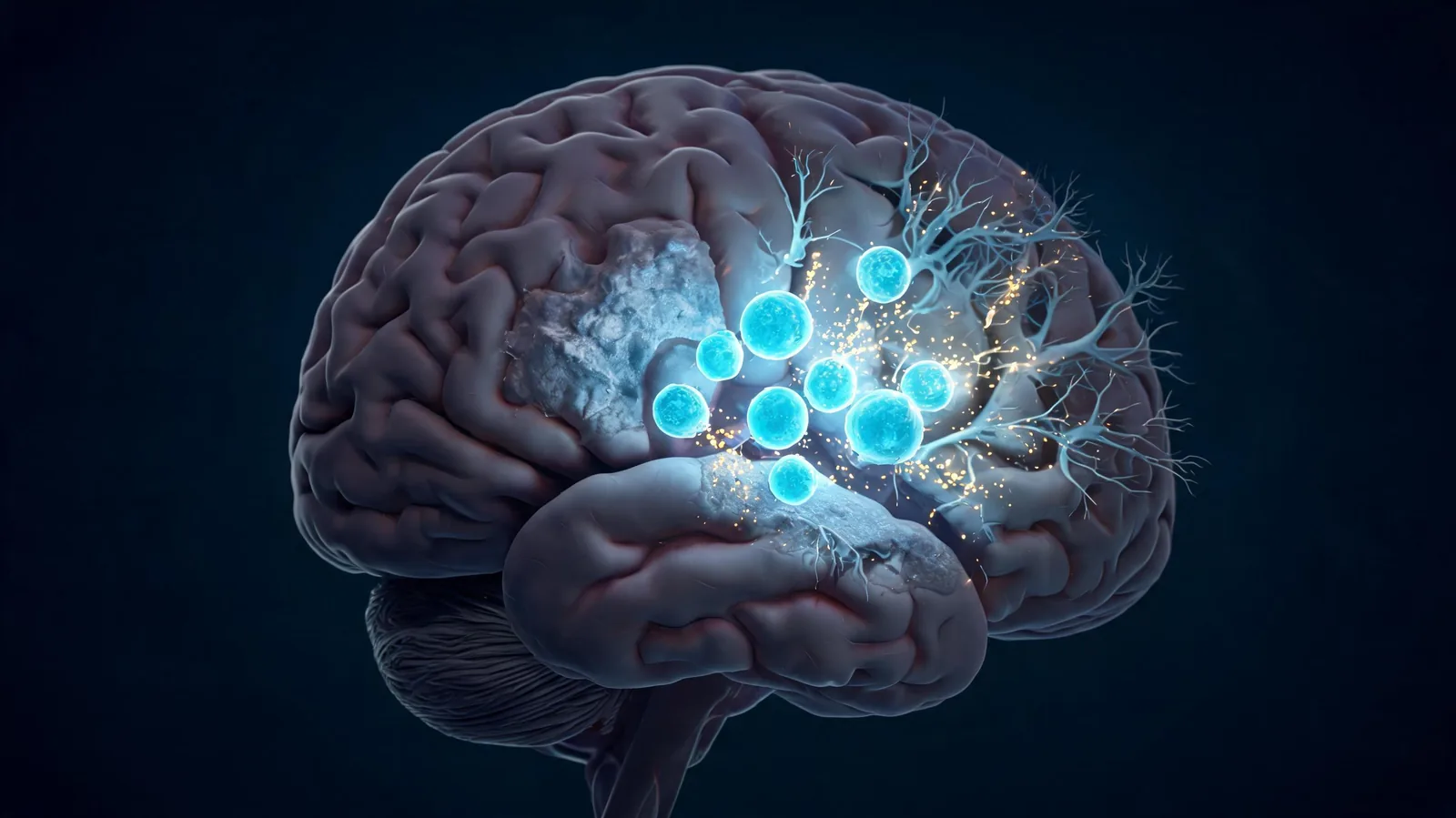
Mesenchymal stem cells secrete factors that modulate immune responses and protect nerves, so they have been studied on the hypothesis that they could reduce inflammation in multiple sclerosis and support repair of damaged nerves. In an open-label phase 2a study (2012) by a team including the University of Cambridge, 10 patients with secondary progressive multiple sclerosis received a single intravenous infusion of mesenchymal stem cells from their own bone marrow. Using the optic nerve as a model, the team reported improvements after infusion in measures such as visual acuity, visual evoked potential latency and optic nerve area, with no major safety problems. Because it was a proof-of-concept study without a control group, randomised studies followed in several countries.
Approach 2: autologous haematopoietic stem cell transplantation
This treatment aims not to regenerate damaged nerves but to 'reset' the immune system. The patient's own blood stem cells are first collected and stored; chemotherapy and immunosuppressants then strongly suppress the existing immune cells that attack myelin; and the stored stem cells are returned so that a new immune system can form.
In an international randomised study (2019) led by a team including Northwestern University in the United States, 110 patients with relapsing-remitting disease who had continued to relapse despite disease-modifying therapy were assigned either to autologous haematopoietic stem cell transplantation or to switching to a different, more effective disease-modifying therapy. Clearly fewer patients in the transplant group experienced disability progression, and the transplant group also did better on relapses and disability scores. The study was published in JAMA, and some countries' clinical guidelines now discuss the treatment as an option for selected patients.
What has been reported about safety
Intravenous mesenchymal stem cells were generally well tolerated in studies. Autologous haematopoietic stem cell transplantation, by contrast, uses chemotherapy and carries considerable side effects — infection, hair loss, possible infertility — and a rare risk of life-threatening complications. It is therefore regarded as a treatment requiring careful selection of patients, such as younger people with highly active disease and not yet severe disability, and delivery in experienced centres.
Points to note and open questions
Although both are called 'stem cell' treatments, mesenchymal stem cell infusion and autologous haematopoietic stem cell transplantation differ completely in principle, risk and level of evidence. Mesenchymal stem cells are at the stage of testing efficacy in randomised studies, while evidence for autologous haematopoietic stem cell transplantation is accumulating in specific patient groups. Treatments that restore damaged myelin and nerves in progressive multiple sclerosis remain an important research goal.
How results are measured in multiple sclerosis research
In multiple sclerosis research, disability is mainly assessed with the Expanded Disability Status Scale (EDSS). It runs from 0 (normal neurological examination) to 10 in half-point steps, combining neurological functions such as vision, sensation, movement, balance and bladder control with walking ability. Studies define 'disability progression' as an increase in EDSS of a set amount sustained for three or six months or more, and compare the time until it occurs; this was the primary outcome of the randomised haematopoietic stem cell transplantation study.
The number of relapses per year (annualised relapse rate) and the number of new or enlarging lesions and contrast-enhancing lesions on MRI are also important. Recently, the absence of relapses, disability progression and new MRI lesions has been called 'no evidence of disease activity' (NEDA) and used as a treatment goal. In mesenchymal stem cell research, measures that more directly reflect nerve repair were used, with the optic nerve as a model: visual acuity, visual evoked potentials and imaging of the retina and optic nerve.
The above summarises results reported in published papers and public-agency materials. University and institute names are given to identify research sources, not to introduce or recommend any medical institution. Reported results do not mean the same effect for everyone, and the suitability of any treatment is decided by the medical team.
Brain Disorders (Stroke, Parkinson's, Dementia, ALS, MS) →
References
- Connick P, Kolappan M, Crawley C, et al. Autologous mesenchymal stem cells for the treatment of secondary progressive multiple sclerosis: an open-label phase 2a proof-of-concept study. Lancet Neurol. 2012;11(2):150-156. View on PubMed
- Burt RK, Balabanov R, Burman J, et al. Effect of nonmyeloablative hematopoietic stem cell transplantation vs continued disease-modifying therapy on disease progression in patients with relapsing-remitting multiple sclerosis: a randomized clinical trial. JAMA. 2019;321(2):165-174. View on PubMed
- U.S. Food and Drug Administration. FDA Warns About Stem Cell Therapies (Consumer Update). https://www.fda.gov/consumers/consumer-updates/fda-warns-about-stem-cell-therapies
FTH Co., Ltd. (FTH) is not a medical institution. We provide overseas medical information guidance and translation and interpretation support for medical materials, and does not provide medical consultation, diagnosis, treatment or medical judgements.