The following is general information introducing research findings. Results reported in studies do not mean the same outcome for any individual, and most of these studies are small or early-stage.
Summary — In ALS (amyotrophic lateral sclerosis), research giving repeated intrathecal doses of autologous mesenchymal stem cells treated to secrete high levels of neurotrophic factors reached phase 3 (2022). This randomised, placebo-controlled phase 3 study showed no significant difference from placebo on its primary outcome across the whole group; the investigators also reported results in a subgroup with milder disease and changes in cerebrospinal fluid biomarkers.
What is ALS?
Amyotrophic lateral sclerosis (ALS) is a progressive neurodegenerative disease in which the motor neurons of the brain and spinal cord, which carry commands to move muscles, are gradually damaged. It often begins with weakness of one hand or foot, slurred speech or difficulty swallowing, and over time weakness and muscle wasting spread throughout the body. As it progresses, breathing muscles may weaken so that respiratory support is needed. Sensation and intellect are often relatively preserved, although some patients develop cognitive or behavioural changes.
Most cases occur without a family history; around 10% are familial and linked to specific genetic variants. The rate of progression varies greatly between people.
Current standard treatment
There is currently no treatment that stops or reverses ALS. Medicines shown to slow progression, such as riluzole and edaravone, are used, and gene-targeted therapy for patients with a specific genetic variant has recently been approved in some countries. Respiratory support, nutritional management (such as a feeding tube), rehabilitation, communication aids and multidisciplinary care also play important roles in quality of life and survival. Edaravone was first approved as an ALS treatment in Japan.
Why stem cells are studied
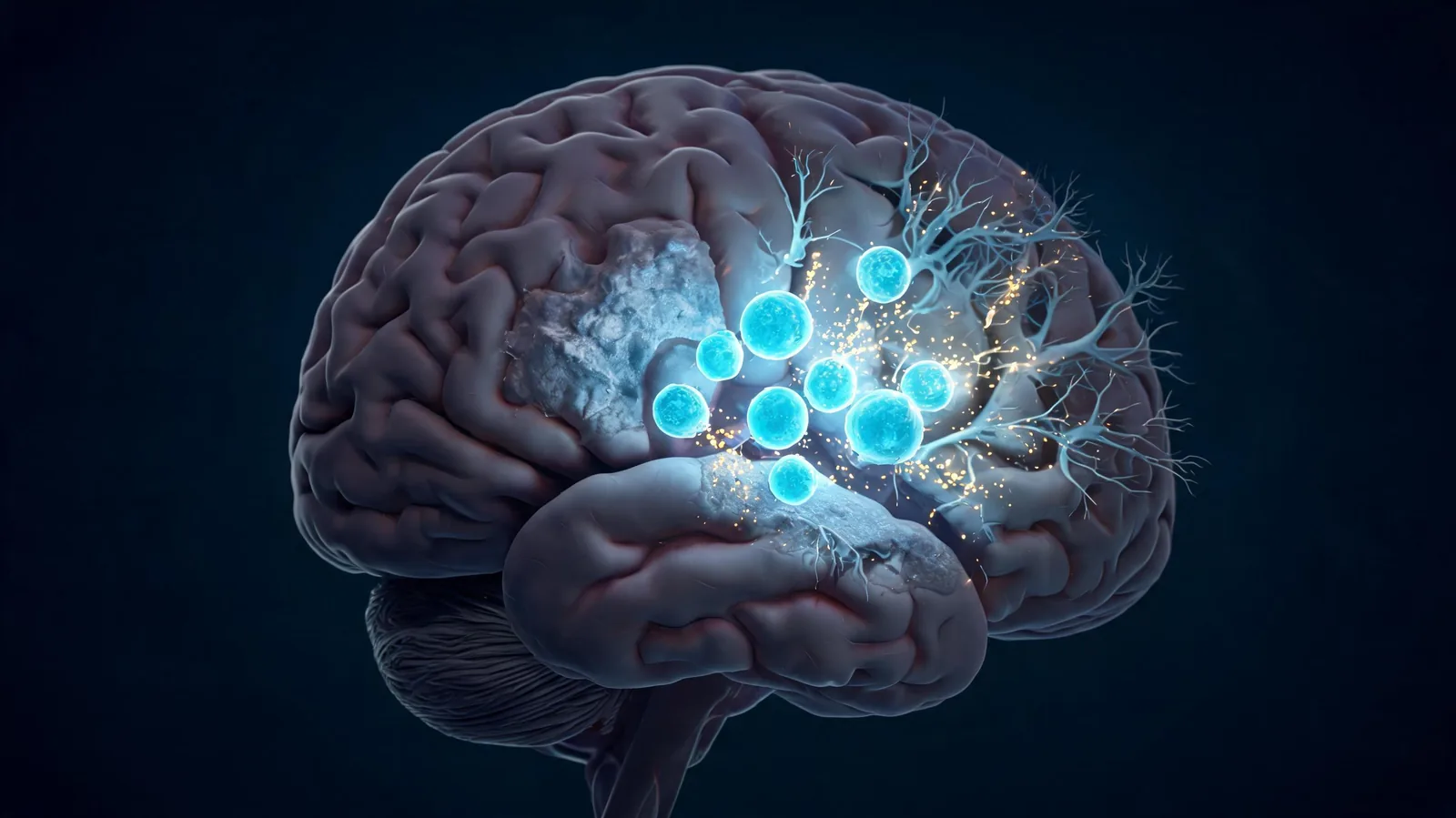
In ALS, stem cell research aims not so much to replace dying motor neurons as to protect remaining motor neurons and improve their surroundings. ALS progression is thought to involve inflammation around motor neurons, functional changes in supporting cells such as astrocytes, and a shortage of neurotrophic factors. Because mesenchymal stem cells secrete factors that modulate inflammation and protect nerves, it was hypothesised that they might change this environment and slow progression.
Reported research findings
Mesenchymal stem cells secreting neurotrophic factors (MSC-NTF) — in this research, mesenchymal stem cells were obtained from the patient's own bone marrow and treated during culture to secrete high levels of neurotrophic factors (proteins that support neuron survival). The cells were then given several times by lumbar injection into the spinal fluid. Earlier studies confirmed safety and observed changes in the rate of progression in some patients, leading to a phase 3 study.
Randomised, placebo-controlled phase 3 study (2022) — patients with ALS were randomised to cells or placebo. The primary outcome was the proportion of patients whose rate of decline on the ALS functional rating scale (ALSFRS-R) improved by at least a set threshold, and there was no statistically significant difference between groups. The investigators also reported an analysis suggesting a better trend in the cell group among patients with relatively high baseline function — that is, less advanced disease — and changes in cerebrospinal fluid biomarkers of nerve damage and inflammation. These subgroup results are exploratory and need confirmation in further studies.
What has been reported about safety
In the phase 3 study, cell administration was generally well tolerated, with adverse events mainly headache, back pain and fever related to repeated intrathecal injections. The physical burden of bone marrow collection and repeated injections should also be considered. The U.S. Food and Drug Administration (FDA) provides information on the risks of unapproved stem cell interventions for conditions including ALS.
Open questions
Because ALS progresses at very different rates in different people, confirming a treatment effect requires studies that closely match participant characteristics. Testing the 'early-stage patient' hypothesis raised in the phase 3 study and using biomarkers to predict treatment response are named as next steps. A review of the clinical use of mesenchymal stromal cells also identifies standardised manufacturing and potency measurement as important challenges.
How results are measured in ALS research
The most widely used assessment in ALS research is the revised ALS Functional Rating Scale (ALSFRS-R). It rates 12 items — speech, salivation, swallowing, handwriting, cutting food, dressing, turning in bed, walking, climbing stairs, shortness of breath, breathing when lying flat and need for respiratory support — from 0 to 4 each, for a maximum of 48; lower scores mean poorer function. Because scores fall steadily over time in ALS, studies often compare how many points are lost per month (the rate of decline) rather than the score itself.
Forced vital capacity, a measure of breathing function, muscle strength measurements, survival and time to permanent respiratory support are also important outcomes. Recently, biomarkers such as neurofilament light chain (NfL), which is released into blood or cerebrospinal fluid when neurons are damaged, have been measured as indicators of disease progression and treatment response, and changes in such biomarkers were reported in the stem cell phase 3 study.
How to look up clinical trial information
Ongoing and completed clinical trials can be checked on public registries. ClinicalTrials.gov, run by the U.S. National Library of Medicine, and jRCT, run by Japan's Ministry of Health, Labour and Welfare, publish each study's purpose, eligibility criteria, intervention, outcomes, institutions and status. Results are later published as journal papers, and the reference links at the bottom of this page lead to the original information. It is also worth knowing that interventions not publicly registered are difficult to verify from outside, in both design and results.
The above summarises results reported in published papers and public-agency materials. University and institute names are given to identify research sources, not to introduce or recommend any medical institution. Reported results do not mean the same effect for everyone, and the suitability of any treatment is decided by the medical team.
Brain Disorders (Stroke, Parkinson's, Dementia, ALS, MS) →
References
- Cudkowicz ME, Lindborg SR, Goyal NA, et al. A randomized placebo-controlled phase 3 study of mesenchymal stem cells induced to secrete high levels of neurotrophic factors in amyotrophic lateral sclerosis. Muscle Nerve. 2022;65(3):291-302. View on PubMed
- Galipeau J, Sensébé L. Mesenchymal stromal cells: clinical challenges and therapeutic opportunities. Cell Stem Cell. 2018;22(6):824-833. View on PubMed
- U.S. Food and Drug Administration. FDA Warns About Stem Cell Therapies (Consumer Update). https://www.fda.gov/consumers/consumer-updates/fda-warns-about-stem-cell-therapies
FTH Co., Ltd. (FTH) is not a medical institution. We provide overseas medical information guidance and translation and interpretation support for medical materials, and does not provide medical consultation, diagnosis, treatment or medical judgements.