The following is general information introducing research findings. Results reported in studies do not mean the same outcome for any individual, and most of these studies are small or early-stage.
Summary — Stem cell research in Alzheimer's dementia is still at an early stage. Because many types of neurons are damaged across wide areas of the brain, replacing cells is difficult, and small clinical studies in several countries have mainly explored the anti-inflammatory actions of mesenchymal stem cells. No stem cell treatment has yet been reported whose improvement of cognitive function was confirmed in large randomised studies.
What is Alzheimer's dementia?
Alzheimer's dementia is the most common cause of dementia: a progressive neurodegenerative disease that begins with memory loss and gradually affects language, judgement, orientation and the ability to carry out daily activities. It is characterised by plaques formed from accumulated amyloid-beta protein and by tangles of tau protein inside neurons, which lead to the gradual loss of neurons and their connections. These brain changes are thought to begin 10–20 years before symptoms appear.
Age is the greatest risk factor, and certain genes (such as APOE ε4) also raise risk. Many studies link modifiable factors such as high blood pressure, diabetes, physical inactivity and hearing loss to risk as well. Detecting and managing the condition at the stage of mild cognitive impairment is considered important.
Current standard treatment
For many years, medicines that ease symptoms (cholinesterase inhibitors and memantine) were the mainstay. More recently, antibody drugs that remove amyloid from the brain have been approved in the United States, Japan, Korea and elsewhere, after clinical trials showed that they slow cognitive decline in early-stage patients. Management of vascular risk factors, cognitive rehabilitation, exercise, social activity and family support also play important roles.
Why cell therapy research is difficult
In Parkinson's disease, the type of neuron lost is relatively clear, so cell replacement research is under way. In Alzheimer's dementia, by contrast, many kinds of neurons and connections are damaged across wide areas of the brain, including the hippocampus that supports memory. In an environment where amyloid and tau keep accumulating, newly introduced cells may also be damaged. For these reasons it is generally considered difficult to approach the disease by cell replacement alone.
Directions of stem cell research
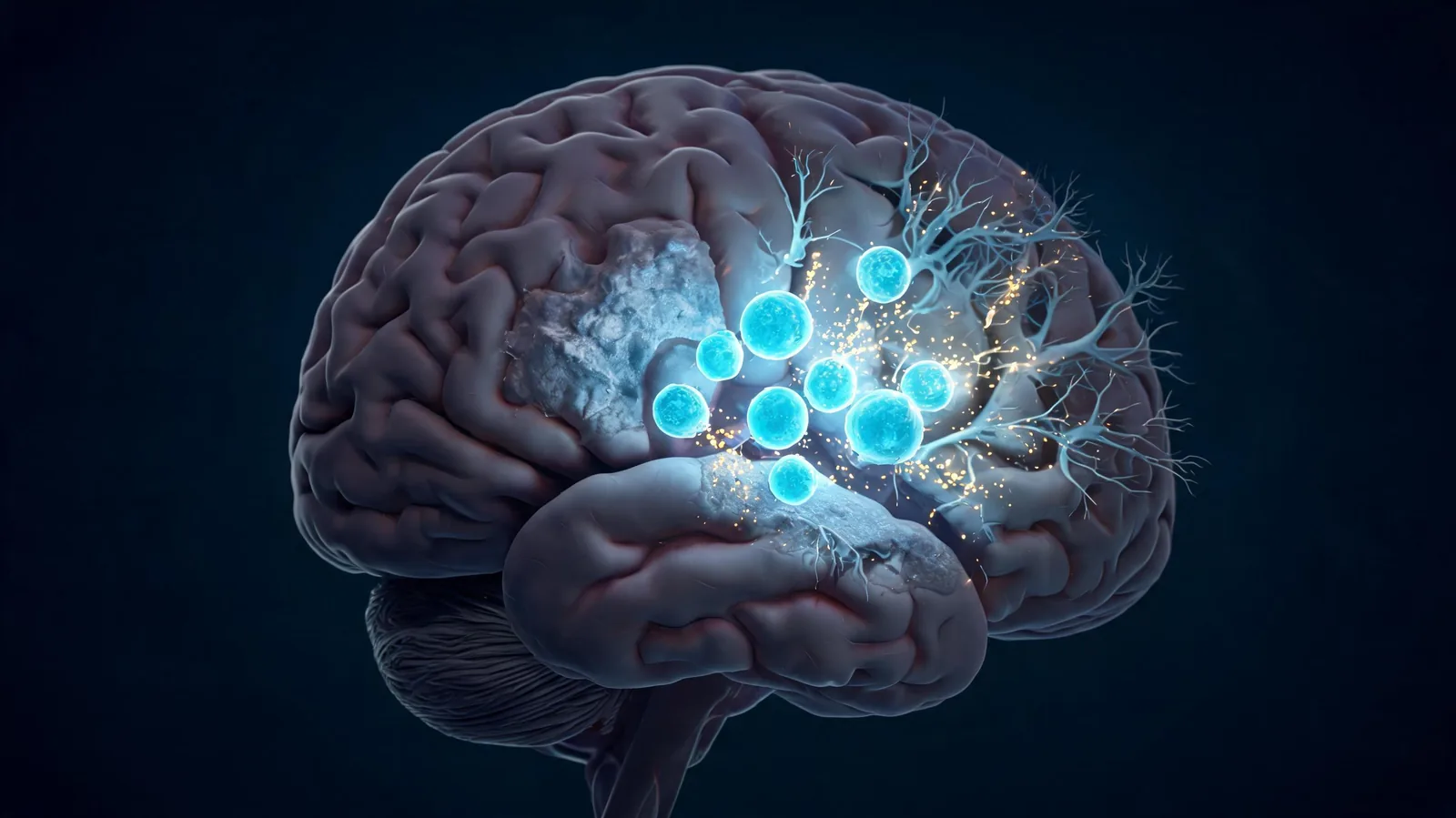
Current research focuses mainly on indirect actions of mesenchymal stem cells through the factors they secrete: modulating brain inflammation, protecting neurons and supporting vascular function. This reflects growing evidence that chronic inflammation involving the brain's immune cells (microglia) influences disease progression. In animal models, changes in amyloid accumulation, inflammatory markers and performance on memory tasks have been reported after mesenchymal stem cell administration.
Research in people
Early clinical studies in several countries have given mesenchymal stem cells intravenously, into the cerebrospinal fluid (intrathecally or intraventricularly), or surgically into the brain. Most were phase 1 or 1/2 studies of a few to a few dozen people, focused on whether the methods could be carried out safely. Some reported changes in inflammatory or imaging markers, but no stem cell treatment has yet shown meaningful improvement in cognitive function in large randomised studies with control groups. A review of the clinical use of mesenchymal stromal cells also lists clarifying the mechanism of action and methods for measuring potency as key challenges.
What has been reported about safety
Intravenous administration was generally reported to be well tolerated in early studies, but giving cells into the cerebrospinal fluid or brain adds the risks of invasive procedures. The fact that many patients are older is also an important consideration in assessing safety. The U.S. Food and Drug Administration (FDA) urges consumers to be cautious about unapproved stem cell interventions for conditions including dementia.
Open questions
Because brain changes in Alzheimer's dementia begin long before symptoms and progress at different rates in different people, confirming the effect of any treatment requires large studies with long follow-up. Stem cell research must likewise be tested in randomised controlled studies that define the right disease stage (mild cognitive impairment, early dementia and so on), cell type and route, and include objective measures such as amyloid and tau imaging. The ISSCR guidelines also call for such rigorous verification.
How results are measured in dementia research
Alzheimer's research assesses both cognitive and daily functioning. The Mini-Mental State Examination (MMSE) briefly assesses memory, orientation, calculation and language out of 30 points, while the cognitive subscale of the Alzheimer's Disease Assessment Scale (ADAS-Cog) measures memory, language and praxis in more detail. In recent antibody drug trials, the Clinical Dementia Rating Sum of Boxes (CDR-SB), which reflects both cognition and daily function, was used as the primary outcome.
To confirm brain changes objectively, imaging such as amyloid PET and tau PET, cerebrospinal fluid tests and recently developed blood biomarker tests are used. Because symptoms progress slowly over years, confirming whether a treatment slows progression usually requires studies of a year or more involving hundreds of people. Early stem cell studies fall short of this in size and duration, making conclusions about cognition difficult.
How to look up clinical trial information
Ongoing and completed clinical trials can be checked on public registries. ClinicalTrials.gov, run by the U.S. National Library of Medicine, and jRCT, run by Japan's Ministry of Health, Labour and Welfare, publish each study's purpose, eligibility criteria, intervention, outcomes, institutions and status. Results are later published as journal papers, and the reference links at the bottom of this page lead to the original information. It is also worth knowing that interventions not publicly registered are difficult to verify from outside, in both design and results.
The above summarises results reported in published papers and public-agency materials. University and institute names are given to identify research sources, not to introduce or recommend any medical institution. Reported results do not mean the same effect for everyone, and the suitability of any treatment is decided by the medical team.
Brain Disorders (Stroke, Parkinson's, Dementia, ALS, MS) →
References
- Galipeau J, Sensébé L. Mesenchymal stromal cells: clinical challenges and therapeutic opportunities. Cell Stem Cell. 2018;22(6):824-833. View on PubMed
- International Society for Stem Cell Research (ISSCR). Guidelines for Stem Cell Research and Clinical Translation (2021). https://www.isscr.org/guidelines
- U.S. Food and Drug Administration. FDA Warns About Stem Cell Therapies (Consumer Update). https://www.fda.gov/consumers/consumer-updates/fda-warns-about-stem-cell-therapies
FTH Co., Ltd. (FTH) is not a medical institution. We provide overseas medical information guidance and translation and interpretation support for medical materials, and does not provide medical consultation, diagnosis, treatment or medical judgements.