The following is general information introducing research findings. Results reported in studies do not mean the same outcome for any individual, and most of these studies are small or early-stage.
Summary — Stem cell research in epilepsy is moving in two main directions. One makes inhibitory neurons, which suppress seizures, from stem cells and transplants them where seizures begin; the other uses the anti-inflammatory actions of mesenchymal stem cells. Animal studies have reported fewer seizures and early clinical trials in people have begun, but no stem cell treatment has yet been established as effective.
What is epilepsy?
Epilepsy is a condition in which abnormal, excessive electrical activity of brain neurons causes recurrent seizures. Seizures vary widely: loss of consciousness with stiffening or jerking of the whole body, brief absences, movements of one limb only, or unusual sensations or emotions.
Causes include brain injury around birth, abnormal brain development (such as cortical dysplasia), genetic factors, stroke, brain tumours, trauma and encephalitis, and in many cases no cause is found. Onset is most common in childhood and older age. Mesial temporal lobe epilepsy with hippocampal sclerosis is a typical form that does not respond to medication.
Current standard treatment
Anti-seizure medicines are central; there are many with different mechanisms, and many patients control seizures with one or two. However, about one-third continue to have seizures despite two or more appropriate medicines and are classed as having drug-resistant epilepsy. Options then include epilepsy surgery, which locates and removes or disconnects the area where seizures start, neurostimulation such as vagus nerve stimulation or deep brain stimulation, and the ketogenic diet. Surgery is highly effective, but it is difficult when the seizure area supports important functions such as memory or language.
Why stem cells are studied
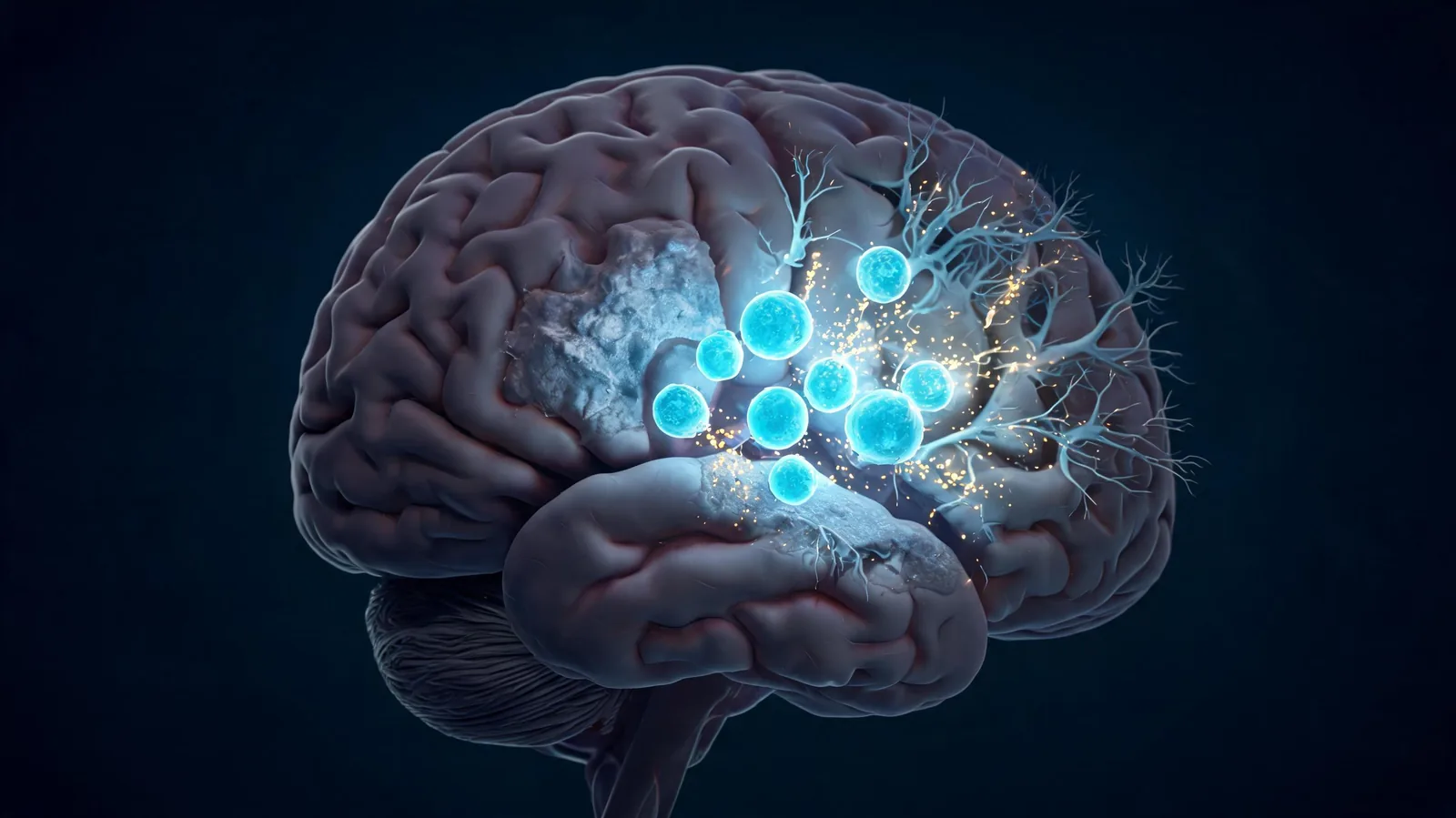
The brain has excitatory neurons that drive activity and inhibitory neurons (interneurons) that restrain it to keep a balance. In some forms of epilepsy, inhibitory neurons are reduced or function poorly, disrupting this balance. Researchers hypothesised that making inhibitory neurons from stem cells and transplanting them where seizures begin could add a 'brake' to the brain and reduce seizures. Because this does not remove the seizure area, there is hope that function could be preserved.
Another direction builds on research showing that chronic brain inflammation is involved in the development and progression of epilepsy, and examines whether factors secreted by mesenchymal stem cells could modulate inflammation and reduce seizures.
Reported research status
In animal models, several studies have reported fewer seizures and milder hippocampal changes after transplanting inhibitory neurons made from human pluripotent stem cells into the hippocampal region. On this basis, an early clinical trial transplanting inhibitory neurons into patients with drug-resistant mesial temporal lobe epilepsy has begun in the United States, and safety and changes in seizure frequency in early participants are being presented at scientific meetings. Small studies giving mesenchymal stem cells intravenously or intrathecally have also been reported in some countries, but most are early-stage and uncontrolled.
Safety and difficulty of interpretation
Transplanting cells into the brain requires long-term monitoring of surgical risks and of the possibility of tumour formation from pluripotent stem cell-derived cells. Moreover, seizure frequency naturally varies a great deal with medication changes, sleep, stress and daily routines, so reports of 'fewer seizures' without a control group are not enough to judge the effect of cell therapy. A review of the clinical use of mesenchymal stromal cells also lists mechanism of action and potency measurement as challenges.
Open questions
Inhibitory neuron transplantation is attracting attention as a possible alternative to conventional surgery, but controlled studies in more patients are needed to confirm efficacy and long-term safety. The ISSCR and the U.S. Food and Drug Administration (FDA) emphasise that investigational stem cell treatments must be verified through rigorous clinical trials.
How results are measured in epilepsy research
The basic data in epilepsy treatment studies are seizure diaries kept by patients and families. Studies set the number of seizures in a period before treatment as a baseline and compare it with the same period after treatment. Effects are commonly expressed as the proportion of patients whose seizures fall by 50% or more (the 50% responder rate), the average reduction in seizure frequency, and the proportion who become seizure-free for a set period. Seizure freedom is regarded as the most meaningful result because it directly affects daily life, such as driving and work.
The International League Against Epilepsy (ILAE) defines drug-resistant epilepsy as seizures not controlled despite adequate use of two appropriately chosen anti-seizure medicines, and most studies of new treatments such as cell therapy target this group. EEG is also used to assess changes in abnormal electrical activity, MRI to check changes in brain structures such as the hippocampus, and cognitive tests including memory to evaluate how treatment affects brain function.
How to look up clinical trial information
Ongoing and completed clinical trials can be checked on public registries. ClinicalTrials.gov, run by the U.S. National Library of Medicine, and jRCT, run by Japan's Ministry of Health, Labour and Welfare, publish each study's purpose, eligibility criteria, intervention, outcomes, institutions and status. Results are later published as journal papers, and the reference links at the bottom of this page lead to the original information. It is also worth knowing that interventions not publicly registered are difficult to verify from outside, in both design and results.
The above summarises results reported in published papers and public-agency materials. University and institute names are given to identify research sources, not to introduce or recommend any medical institution. Reported results do not mean the same effect for everyone, and the suitability of any treatment is decided by the medical team.
Brain Disorders (Stroke, Parkinson's, Dementia, ALS, MS) →
References
- Galipeau J, Sensébé L. Mesenchymal stromal cells: clinical challenges and therapeutic opportunities. Cell Stem Cell. 2018;22(6):824-833. View on PubMed
- International Society for Stem Cell Research (ISSCR). Guidelines for Stem Cell Research and Clinical Translation (2021). https://www.isscr.org/guidelines
- U.S. Food and Drug Administration. FDA Warns About Stem Cell Therapies (Consumer Update). https://www.fda.gov/consumers/consumer-updates/fda-warns-about-stem-cell-therapies
FTH Co., Ltd. (FTH) is not a medical institution. We provide overseas medical information guidance and translation and interpretation support for medical materials, and does not provide medical consultation, diagnosis, treatment or medical judgements.