The following is general information introducing research findings. Results reported in studies do not mean the same outcome for any individual, and most of these studies are small or early-stage.
Summary — The main conditions related to female infertility in which stem cell research is reported are premature ovarian insufficiency and thin endometrium or intrauterine adhesions. Studies giving stem cells from bone marrow, fat or umbilical cord into the ovary or uterus have been reported as animal experiments and early studies in small numbers of patients, and some case reports have described changes in hormone levels or endometrial thickness, or pregnancies. Efficacy has not, however, been confirmed in randomised studies with control groups.
Conditions being studied
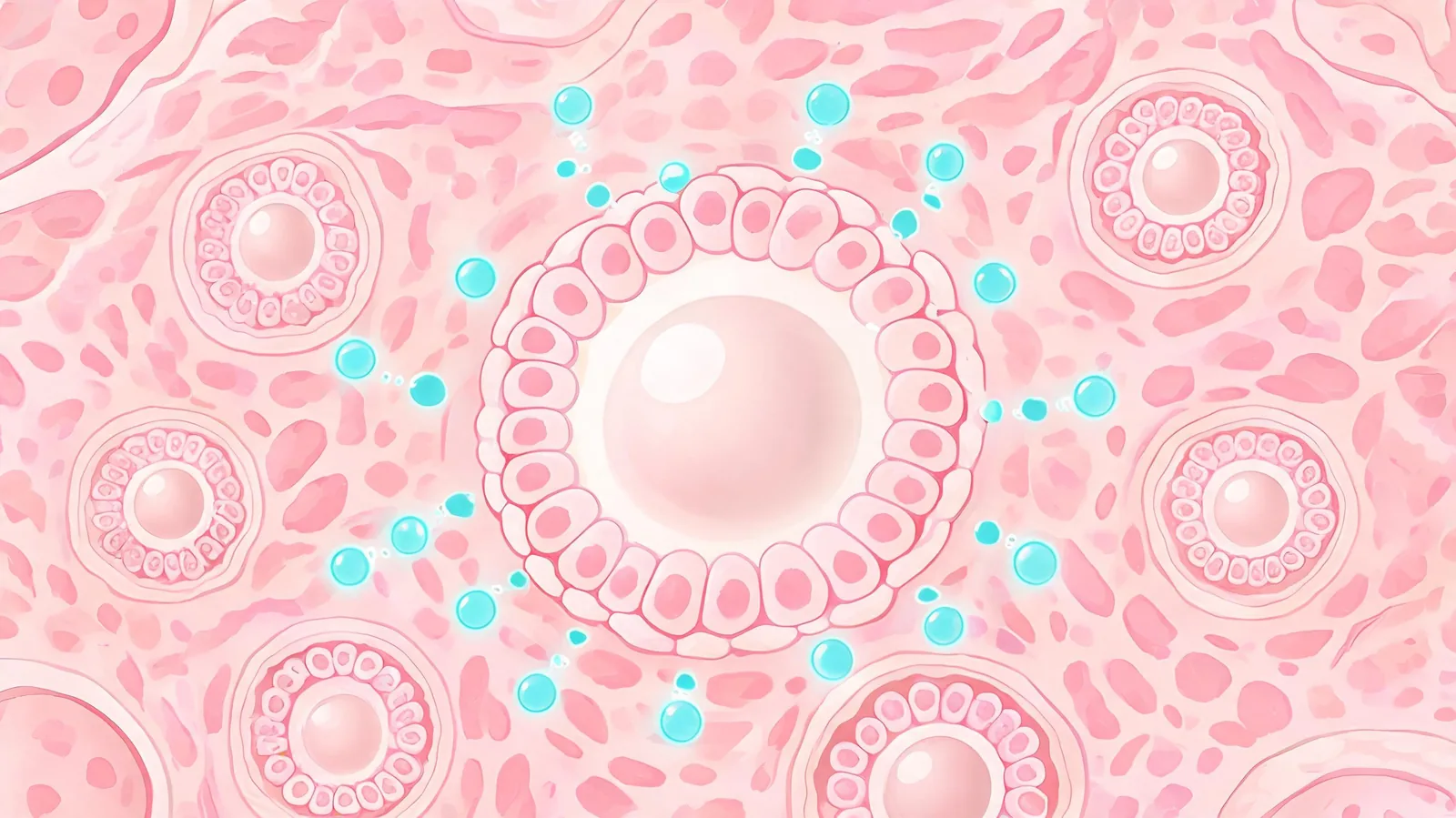
Premature ovarian insufficiency is loss of ovarian function before the age of 40, with irregular or absent periods and a lack of female hormones. Levels of follicle-stimulating hormone (FSH) rise and levels of anti-Müllerian hormone (AMH), a marker of ovarian reserve, fall. Causes include chromosomal or genetic abnormalities, autoimmune disease, chemotherapy or radiotherapy and ovarian surgery, and in many cases the cause is unknown. Besides making pregnancy difficult, the lack of female hormones can affect bone and cardiovascular health.
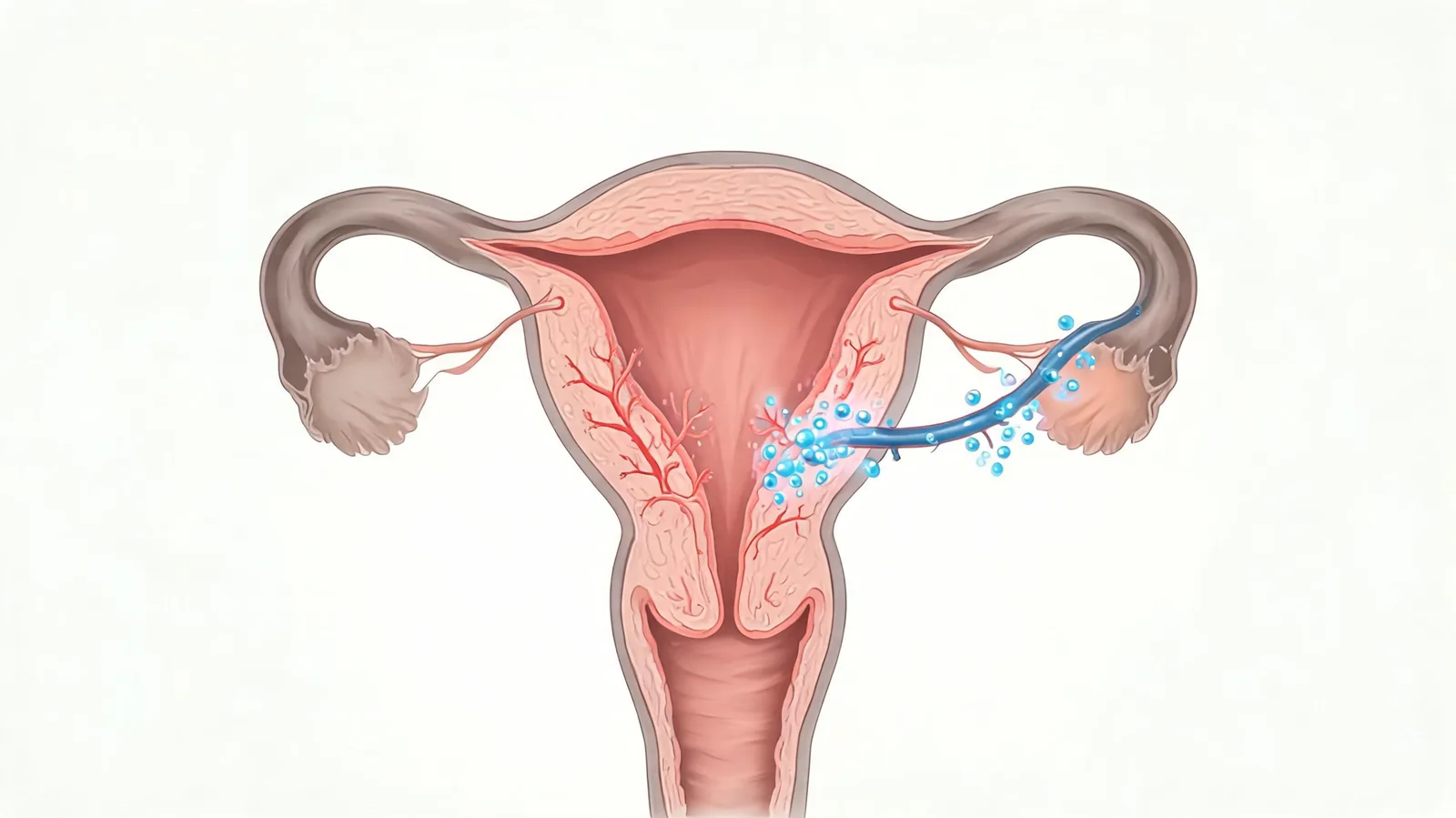
Thin endometrium and intrauterine adhesions (Asherman syndrome) are conditions in which the lining of the uterus does not thicken enough, or scar tissue forms inside the uterus after repeated curettage or infection, making it difficult for an embryo to implant. They can cause repeated implantation failure even when good embryos are transferred in IVF.
Current standard treatment
In premature ovarian insufficiency, hormone replacement to manage symptoms and protect bone and cardiovascular health is the foundation. For those wishing to conceive, assisted reproduction that makes the most of remaining ovarian function is tried, but when little function remains, IVF with donor eggs is often the realistic option. Young women facing cancer treatment can freeze eggs or ovarian tissue in advance. Intrauterine adhesions are treated by hysteroscopic removal of scar tissue and hormone therapy to support the lining, but severe cases often recur.
Why stem cells are studied
Researchers hypothesised that growth factors and signalling molecules secreted by stem cells might improve blood flow to the ovary, support the growth of remaining immature follicles, or improve the regenerative environment of a damaged endometrium. There is no evidence that infused cells become eggs; indirect improvement of the surrounding environment is mainly discussed. In animal models of ovarian damage caused by chemotherapy, several studies reported recovery of hormone levels and follicle numbers after stem cell administration.
Reported research status
Studies in people are mostly case reports or early studies in small numbers of patients. In premature ovarian insufficiency, after autologous bone marrow-derived cells or umbilical cord-derived mesenchymal stem cells were injected directly into the ovary (for example laparoscopically) or given through blood vessels, some patients were reported to resume periods or show improved hormone levels, and a few pregnancies were reported. In intrauterine adhesions and thin endometrium, increased endometrial thickness and pregnancies have also been reported after autologous bone marrow cells or cord-derived cells were given into the uterus.
These reports point to new possibilities but must be interpreted with care. Most have no control group, involve few patients, and pregnancies often occurred together with other treatments such as IVF. It should also be remembered that ovarian function occasionally recovers spontaneously and temporarily in premature ovarian insufficiency.
Safety and points to note
Injecting cells directly into the ovary or uterus carries the risks of anaesthesia and laparoscopic or hysteroscopic procedures. Long-term safety, especially effects on pregnancy and on children born, is not yet well known. A 2018 commentary in Nature highlighted the sale of unproven stem cell interventions in many countries, and the ISSCR and the U.S. Food and Drug Administration (FDA) also urge caution about unapproved interventions. Information promoting the possibility of pregnancy especially warrants checking the size and design of the underlying studies.
Open questions
For stem cell research in female infertility to advance, randomised studies with control groups are needed in clearly defined patient groups, along with long-term follow-up including pregnancy and birth outcomes. It is also important to establish what benefit there may be compared with existing treatments in reproductive medicine.
How ovarian function and the uterine environment are measured
In infertility research, ovarian function is assessed mainly with blood tests and ultrasound. Anti-Müllerian hormone (AMH) reflects the number of follicles remaining in the ovary, and follicle-stimulating hormone (FSH) and oestradiol levels show how the ovary responds to hormonal stimulation; the antral follicle count on transvaginal ultrasound is also used to assess ovarian reserve. The uterine environment is assessed by endometrial thickness on transvaginal ultrasound and the extent of adhesions on hysteroscopy.
Changes in these measures do not necessarily lead to pregnancy and birth, however. The most important outcomes in reproductive medicine research are the clinical pregnancy rate and the live birth rate — the proportion in which a baby is actually born. Changes in hormone levels or endometrial thickness reported in stem cell studies are intermediate measures; judging efficacy requires studies comparing the final outcome, live birth, with a control group. The meaning of results also changes greatly depending on whether other treatments such as IVF were received during the same period.
The above summarises results reported in published papers and public-agency materials. University and institute names are given to identify research sources, not to introduce or recommend any medical institution. Reported results do not mean the same effect for everyone, and the suitability of any treatment is decided by the medical team.
References
- International Society for Stem Cell Research (ISSCR). Guidelines for Stem Cell Research and Clinical Translation (2021). https://www.isscr.org/guidelines
- Sipp D, Robey PG, Turner L. Clear up this stem-cell mess. Nature. 2018;561(7724):455-457. View on PubMed
- U.S. Food and Drug Administration. FDA Warns About Stem Cell Therapies (Consumer Update). https://www.fda.gov/consumers/consumer-updates/fda-warns-about-stem-cell-therapies
FTH Co., Ltd. (FTH) is not a medical institution. We provide overseas medical information guidance and translation and interpretation support for medical materials, and does not provide medical consultation, diagnosis, treatment or medical judgements.