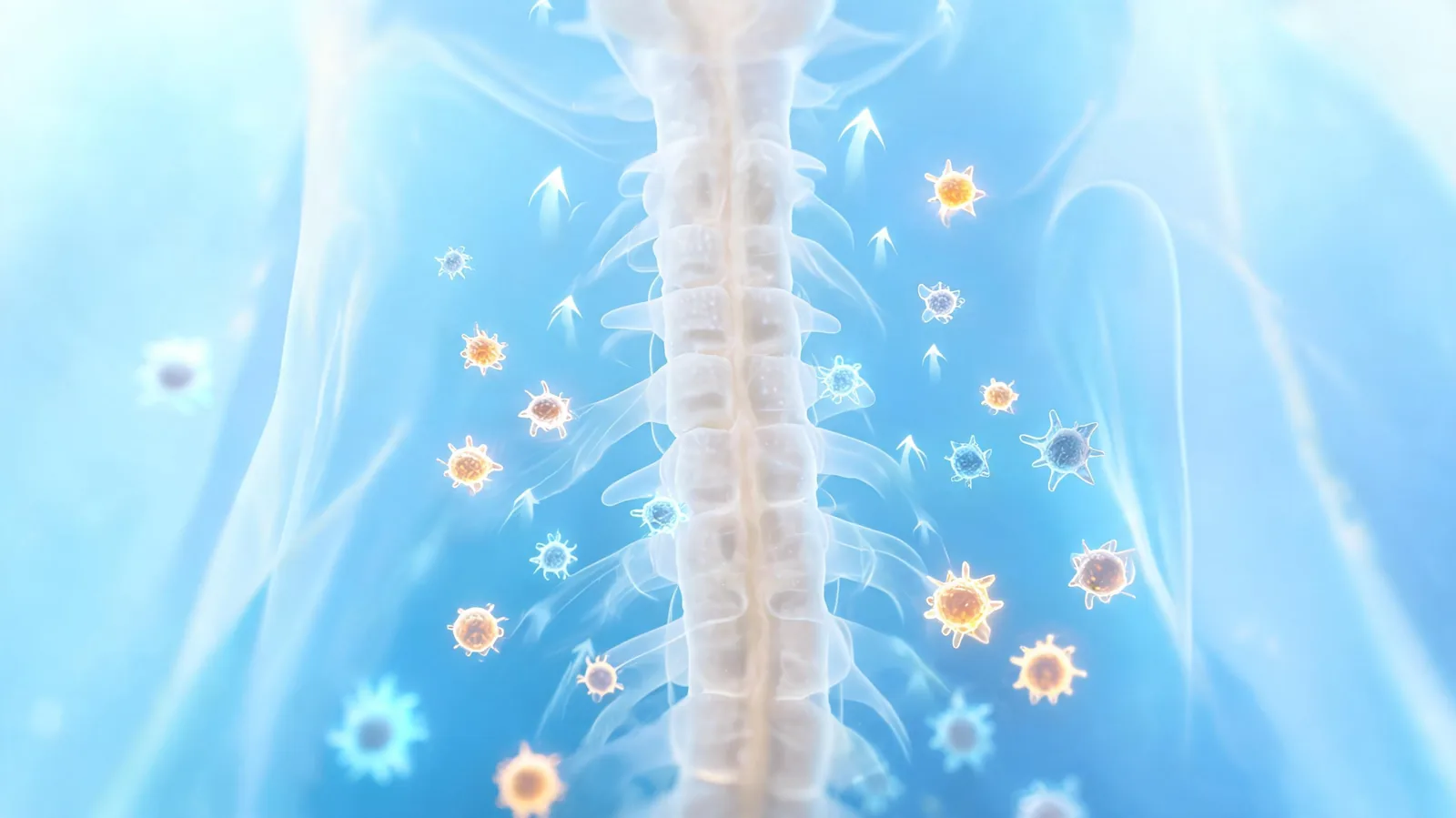
The following is general information introducing research findings. Results reported in studies do not mean the same outcome for any individual, and most of these studies are small or early-stage.
Summary — Developmental disorders form a broad category, and stem cell clinical studies have been designed for specific diagnoses within it, such as autism spectrum disorder and cerebral palsy. In cerebral palsy, changes in motor function were reported in children who received at least a certain dose of autologous cord blood; in autism spectrum disorder, exploratory signals were reported in some subgroups of a phase II study. No stem cell treatment has been shown to be effective for developmental disorders as a whole.
The category of developmental disorders
'Developmental disorder' is a broad term for conditions in which development in areas such as movement, language, cognition, social skills or daily living skills is delayed or follows a different pattern from peers. It includes conditions with different causes and characteristics: autism spectrum disorder, intellectual disability, cerebral palsy, attention-deficit/hyperactivity disorder (ADHD), specific learning disorders, language disorders and others. Even under the same label, which brain functions are affected and why differs greatly from child to child.
The causes also vary — some are largely genetic, some arise from brain injury during pregnancy or around birth, and in some the cause cannot be identified. Support therefore begins with careful assessment of each child, and treatment and support differ by diagnosis and characteristics.
Current standard support
Early identification and early intervention are central. Speech therapy, occupational therapy, physiotherapy, behavioural intervention, special education and family education are combined to meet each child's needs. Some conditions, such as ADHD, have medicines of proven effectiveness; others, such as cerebral palsy, are managed with rehabilitation, spasticity treatment and orthopaedic surgery. Such support often continues steadily over several years.
Stem cell studies target specific diagnoses
The main stem cell clinical studies published so far were designed for specific diagnoses, not for 'developmental disorders' as a whole, because grouping conditions with different causes and brain changes makes results hard to interpret. Key studies include:
- Cerebral palsy — a Duke University team ran a randomised, placebo-controlled study of autologous cord blood in 63 children with cerebral palsy (2017). Children who received at least a certain dose per body weight showed greater improvement in gross motor function scores, and changes in imaging measures of brain connectivity were reported. A 2016 systematic review pooling studies found a small improvement in motor function in stem cell groups but noted that the number and quality of studies were limited.
- Autism spectrum disorder — the same team's randomised phase II study of 180 children (2020) found no difference on the primary outcome overall, with exploratory differences reported in some communication and EEG measures in children without intellectual disability.
These two results answer different questions. Findings in cerebral palsy cannot be applied directly to autism spectrum disorder or other developmental disorders, and vice versa.
Cells used in research
Studies related to developmental disorders have mainly used autologous cord blood banked at birth, donor cord blood, and mesenchymal stem cells grown from umbilical cord tissue or bone marrow. Most were given intravenously, and some small studies in other countries gave cells into the spinal fluid (intrathecally). Because results can differ with cell type, dose and route, it is important to check which cells were given and how.
What has been reported about safety
In clinical trial settings, intravenously administered cord blood and mesenchymal stem cells have generally been associated with mild-to-moderate adverse events, with serious problems described as uncommon. However, the numbers of children studied are small and follow-up is short, so long-term safety data are limited. The U.S. Food and Drug Administration (FDA) urges consumers to be cautious, citing adverse events such as infections and injection-site problems from unapproved stem cell interventions.
Open questions
For the field to move forward, studies need to divide participants by diagnosis and characteristics and run randomised controlled trials with pre-specified outcomes. Because children's development changes naturally over time and rehabilitation and education have large effects, study designs that can separate these influences from the effect of cell administration are important. The International Society for Stem Cell Research (ISSCR) states that clinical use of stem cells should go through such rigorous trials and independent review.
How development is assessed
Developmental disorder research uses standardised tools suited to the child's age and diagnosis. Overall development in infants and toddlers is assessed with tools such as the Bayley Scales of Infant and Toddler Development, which compare cognitive, language and motor development with age norms. Daily living skills and socialisation are measured with the Vineland Adaptive Behavior Scales, motor function in children with cerebral palsy with the Gross Motor Function Measure (GMFM), and in autism spectrum disorder, tools observing communication and social interaction are also used.
These scores change naturally as children grow and are influenced by therapy and education received in the same period. Treatment studies therefore need blinded assessment, in which assessors do not know which group a child is in, and comparison with a control group. It is also necessary to look at changes across several areas rather than a single score, and to judge whether the change is large enough to matter in everyday life.
The above summarises results reported in published papers and public-agency materials. University and institute names are given to identify research sources, not to introduce or recommend any medical institution. Reported results do not mean the same effect for everyone, and the suitability of any treatment is decided by the medical team.
Autism, Developmental Disorders & Cerebral Palsy →
References
- Dawson G, Sun JM, Baker J, et al. A phase II randomized clinical trial of the safety and efficacy of intravenous umbilical cord blood infusion for treatment of children with autism spectrum disorder. J Pediatr. 2020;222:164-173. View on PubMed
- Sun JM, Song AW, Case LE, et al. Effect of autologous cord blood infusion on motor function and brain connectivity in young children with cerebral palsy: a randomized, placebo-controlled trial. Stem Cells Transl Med. 2017;6(12):2071-2078. View on PubMed
- Novak I, Walker K, Hunt RW, et al. Concise review: stem cell interventions for people with cerebral palsy: systematic review with meta-analysis. Stem Cells Transl Med. 2016;5(8):1014-1025. View on PubMed
- International Society for Stem Cell Research (ISSCR). Guidelines for Stem Cell Research and Clinical Translation (2021). https://www.isscr.org/guidelines
- U.S. Food and Drug Administration. FDA Warns About Stem Cell Therapies (Consumer Update). https://www.fda.gov/consumers/consumer-updates/fda-warns-about-stem-cell-therapies
FTH Co., Ltd. (FTH) is not a medical institution. We provide overseas medical information guidance and translation and interpretation support for medical materials, and does not provide medical consultation, diagnosis, treatment or medical judgements.