The following is general information introducing research findings. Results reported in studies do not mean the same outcome for any individual, and most of these studies are small or early-stage.
Summary — In spring 2026, liver cirrhosis stem cell research brought encouraging results in patients. The Vinmec Research Institute of Stem Cell and Gene Technology in Hanoi, Vietnam, reported in Cell Transplantation a phase 1 trial in which donor umbilical cord-derived mesenchymal stem cells were infused through the hepatic artery. Serum albumin rose and liver scores improved, with no serious adverse events. Around the same time, the University of Edinburgh reported in Cell Stem Cell four-year results of a macrophage therapy made from patients' own blood cells: 70% of treated patients were alive without a liver transplant, versus 40% on standard care. This article walks through both studies.
Why does liver cirrhosis need new treatments?
Liver cirrhosis develops when repeated inflammation from viral hepatitis, long-term alcohol use, metabolic fatty liver disease and other causes leaves scar tissue that stiffens the liver. Early on there are few symptoms, but once it becomes decompensated cirrhosis, complications such as ascites, variceal bleeding, jaundice and hepatic encephalopathy appear.
According to the Edinburgh team, cirrhosis causes more than one million deaths worldwide each year, and over three-quarters of patients are diagnosed too late for effective treatment. Treating the cause and managing complications are the foundation, but no medicine yet restores a scarred liver, and the last option is a transplant. Donor livers are scarce, so many patients wait. That is why cell therapies that reduce scarring and support regeneration have been studied steadily. For an overview, see the liver cirrhosis stem cell research page.
Liver cirrhosis stem cells via the hepatic artery: a phase 1 trial in Vietnam
From 2020 to 2023, the Vinmec team enrolled 20 patients with liver cirrhosis at a single center in an open-label phase 1 trial. The cells were umbilical cord-derived mesenchymal stem cells (UC-MSCs), expanded from donated umbilical cord tissue. Each patient received a single infusion of 1 million cells per kg of body weight into the hepatic artery, the vessel that supplies the liver, so that the cells reach the liver directly rather than through a vein.
Patients were assessed at baseline and at 3, 6 and 12 months with liver function tests, the MELD and Child-Pugh severity scores, and the Chronic Liver Disease Questionnaire (CLDQ). Data from the 17 patients who completed follow-up were analyzed.
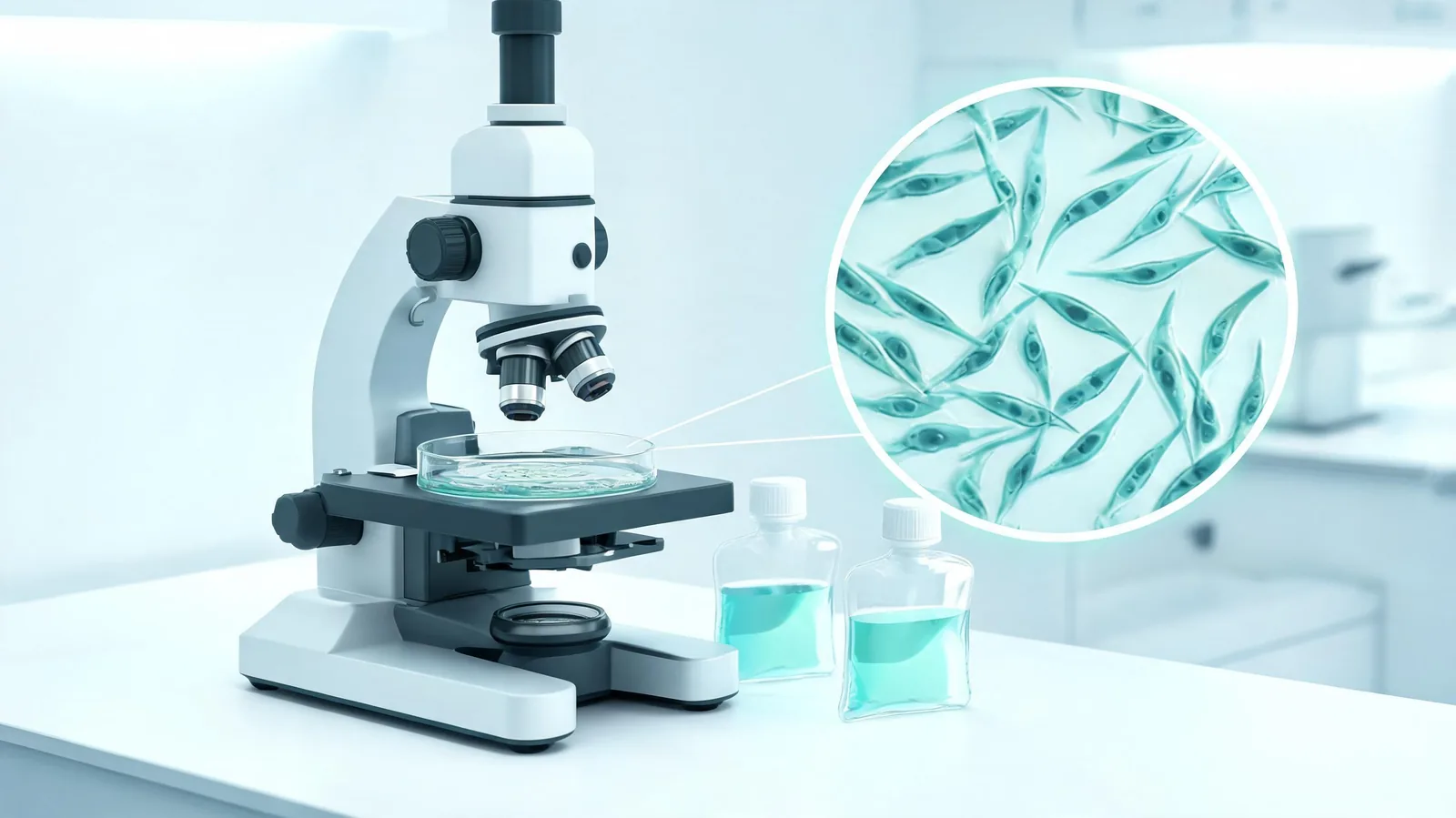
Higher albumin and better quality of life were reported
Serum albumin, a protein made by the liver, rose significantly at 3 and 6 months. Albumin is a key marker of how well the liver is working. The Child-Pugh score fell at 3 months, pointing toward better liver function. Bilirubin, liver enzymes, clotting markers and the MELD score stayed stable over 12 months, which is itself a meaningful signal in a progressive disease.
Scores in most domains of the patient-reported quality-of-life questionnaire also rose. There were no serious adverse events, and mild events resolved on their own. The team proposed larger, controlled studies as the next step. The same group also published a randomized phase 2 trial of cord-derived stem cells for frailty in eBioMedicine; see our frailty stem cell trials article.
Edinburgh macrophage therapy: survival benefit lasting four years
On May 25, 2026, Professor Stuart Forbes and colleagues at the University of Edinburgh Institute for Regeneration and Repair published in Cell Stem Cell the long-term follow-up of MATCH, a randomized controlled phase 2 trial. This therapy is not a stem cell product: immune cells (monocytes) taken from the patient's own blood are matured into macrophages in the laboratory and infused back. The macrophages are described as travelling to the liver, breaking down scar tissue, reducing harmful inflammation and helping healthy liver cells grow. The Scottish National Blood Transfusion Service and the University of Dundee took part.
Fifty patients joined: 26 received macrophage therapy and 24 received standard care. Over up to four years, 70% of treated patients were alive without a liver transplant, versus 40% in the standard care group. Death or transplant occurred in 30.8% of the treated group (8 deaths, no transplants) and 58.3% of the control group (9 deaths, 5 transplants). Restricted mean survival time was 252 days longer with treatment. Blood analysis showed that stabilizing inflammatory signals went together with better survival. The cell therapy did not increase serious adverse events.
Liver cirrhosis stem cell and cell therapy research moves forward
Building on MATCH, Resolution Therapeutics, co-founded by Professor Forbes, is running the phase 1/2 EMERALD trial of RTX001, an enhanced macrophage therapy, in the UK and Spain. It enrolls patients with end-stage liver disease and a history of decompensated cirrhosis, and interim results are expected in the second half of 2026.
The Vietnamese trial was a small phase 1 study without a control group, and the Edinburgh study was a 50-patient phase 2 trial. Both therefore show reported benefits, and larger trials will continue to build the evidence. Still, improvements in liver function and survival reported with different cells in different countries are encouraging news for cirrhosis cell therapy. Earlier examples are covered in our heart and liver cirrhosis stem cell article.
Frequently asked questions
What cells are used in liver cirrhosis stem cell therapy?
The Vietnamese phase 1 trial used umbilical cord-derived mesenchymal stem cells from donated cord tissue. Other studies use mesenchymal stem cells from bone marrow or fat. The Edinburgh therapy uses macrophages made from the patient's blood rather than stem cells.
How are the cells given?
In the Vietnamese trial, cells were infused once into the hepatic artery. Some studies use an arm vein instead. The route and cell dose are set by each study protocol.
Can patients waiting for a liver transplant take part?
Eligibility differs by trial. Some, like the ongoing EMERALD trial, enroll patients with end-stage liver disease. Whether participation is suitable, and its risks, is decided by the treating medical team after assessing the liver and overall health.
Conclusion
In liver cirrhosis stem cell research, hepatic artery infusion of umbilical cord-derived mesenchymal stem cells was followed by higher albumin and better quality of life in a phase 1 trial, and macrophage therapy was reported to extend transplant-free survival over four years in a randomized phase 2 trial. Research toward new ways to protect the liver is advancing step by step. Reported results do not mean the same effect for every patient; suitability and risks are judged by the treating medical team.
References
- Nguyen LT, Nguyen HP, Bui HT, Nguyen QT, Nguyen PV, Ha HTT, et al. Safety and preliminary efficacy of allogeneic umbilical cord-derived mesenchymal stem cells administered via the hepatic artery in patients with liver cirrhosis: a phase I open-label trial. Cell Transplant. 2026. doi:10.1177/09636897261449975 View on PubMed
- Vinmec Research Institute of Stem Cell and Gene Technology. Prof. Liem and team published back-to-back clinical achievements. 2026-05-29. https://vrisg.vinuni.edu.vn/2026/05/29/prof-liem-and-team-published-back-to-back-clinical-achievements/
- Brennan PN, et al. Autologous macrophage therapy increased transplant-free survival in cirrhosis: long-term follow-up of a phase 2 clinical trial. Cell Stem Cell. 2026. doi:10.1016/j.stem.2026.04.016 View on PubMed
- University of Edinburgh. Cell therapy boost for advanced liver disease treatment (EurekAlert!). 2026-05-25. https://www.eurekalert.org/news-releases/1129218
- Resolution Therapeutics. Resolution Therapeutics congratulates University of Edinburgh on positive 4-year MATCH trial data on RMT in liver cirrhosis. 2026-05-25. https://www.biospace.com/press-releases/resolution-therapeutics-congratulates-university-of-edinburgh-on-positive-4-year-match-trial-data-on-rmt-in-liver-cirrhosis
FTH Co., Ltd. (FTH) is not a medical institution. We provide overseas medical information guidance and translation and interpretation support for medical materials, and does not provide medical consultation, diagnosis, treatment or medical judgements.