The following is general information introducing research findings. Results reported in studies do not mean the same outcome for any individual, and most of these studies are small or early-stage.
Summary — Research on bone marrow stem cells for Alzheimer's disease brought hopeful news in the summer of 2026. At the Alzheimer's Association International Conference (AAIC 2026) in London in July, the US company Longeveron presented a further analysis showing that brain inflammation signals stayed lower than placebo in people with mild Alzheimer's disease who received laromestrocel (Lomecel-B), a mesenchymal stem cell product made from the bone marrow of healthy young adults. In the same month, researchers at Qinghai University in China reported a meta-analysis of six studies with 196 patients in which low-dose mesenchymal stem cells significantly improved cognitive scores and daily-living ability.
What is Alzheimer's disease, and how is it treated today?
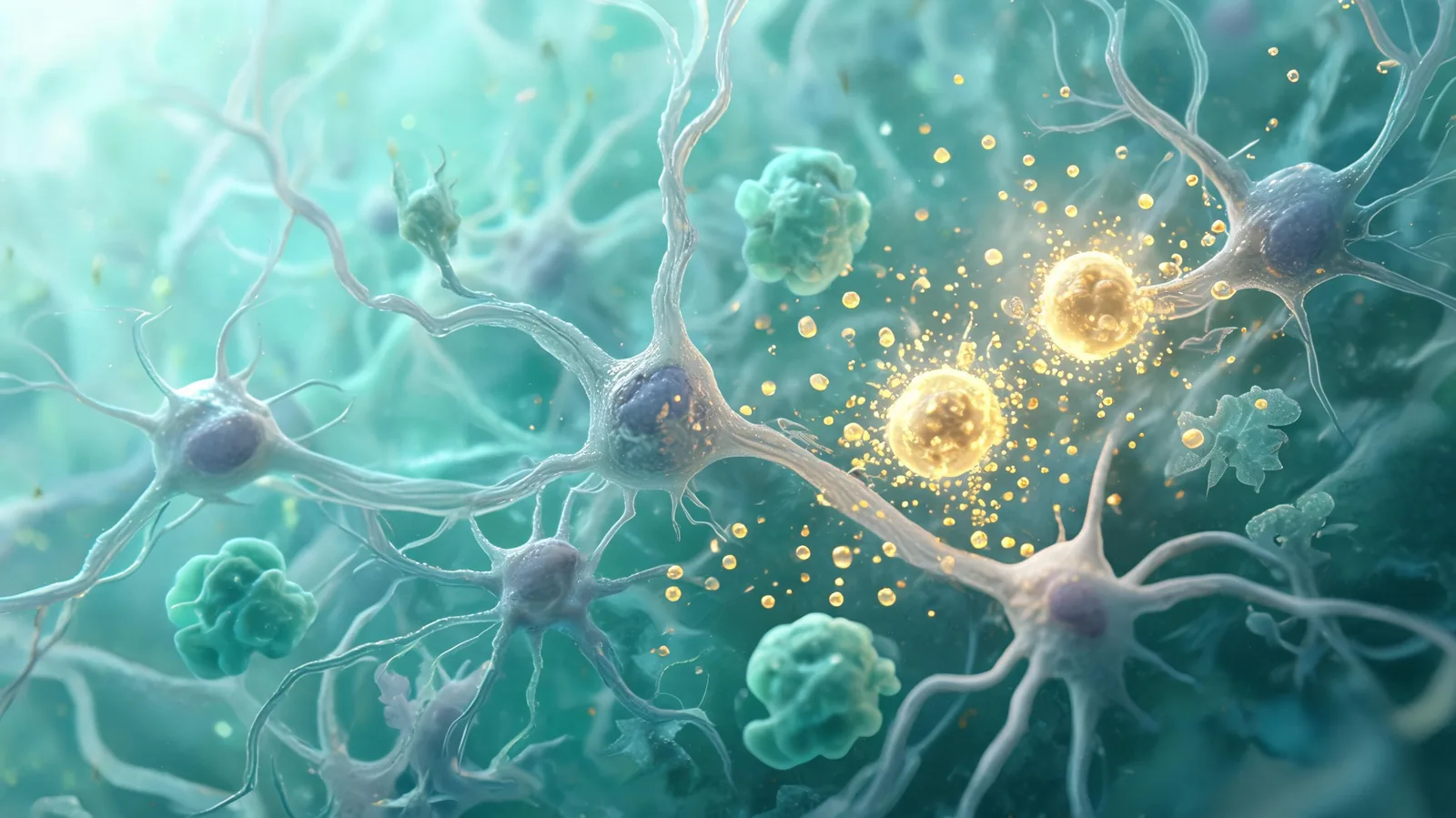
Alzheimer's disease (アルツハイマー病 in Japanese) is the most common degenerative brain disease behind dementia. Amyloid beta and tau proteins build up in the brain, and nerve cells are lost, starting in the hippocampus that handles memory, so memory, judgment and everyday abilities gradually decline. Neuroinflammation, in which the brain's immune cells (microglia) stay activated for a long time, is now also seen as an important driver of the disease.
Current treatment centers on cognitive enhancers such as donepezil and, for early-stage patients, antibody drugs that remove amyloid (lecanemab and donanemab). Both antibodies are also used in Japan. Methods that restore lost nerve cells or directly calm neuroinflammation are still lacking, so research using cells to change the brain environment is under way in many countries. An overview of the field is on our Alzheimer's dementia stem cell research page, and early treatment options are covered in our article on early Alzheimer's treatment.
Laromestrocel — a mesenchymal stem cell product from bone marrow
Laromestrocel consists of allogeneic (donor-derived) mesenchymal stem cells isolated and grown from the bone marrow of young, healthy adult donors. Rather than becoming nerve cells themselves, mesenchymal stem cells are known to release anti-inflammatory substances and growth factors that support repair of surrounding tissue. It is being developed by Longeveron, based in Miami, and the US Food and Drug Administration (FDA) has granted it Regenerative Medicine Advanced Therapy (RMAT) and Fast Track designations for mild Alzheimer's disease.
Its effects were studied in CLEAR MIND, a randomized, placebo-controlled phase 2a trial in mild Alzheimer's disease. Patients received one of the following intravenously: placebo, 25 million cells once, 25 million cells four times at monthly intervals, or 100 million cells split over four doses. The company says that, based on this trial, it has aligned with the FDA on a phase 3 study design.
Alzheimer bone marrow stem cell analysis presented at AAIC 2026
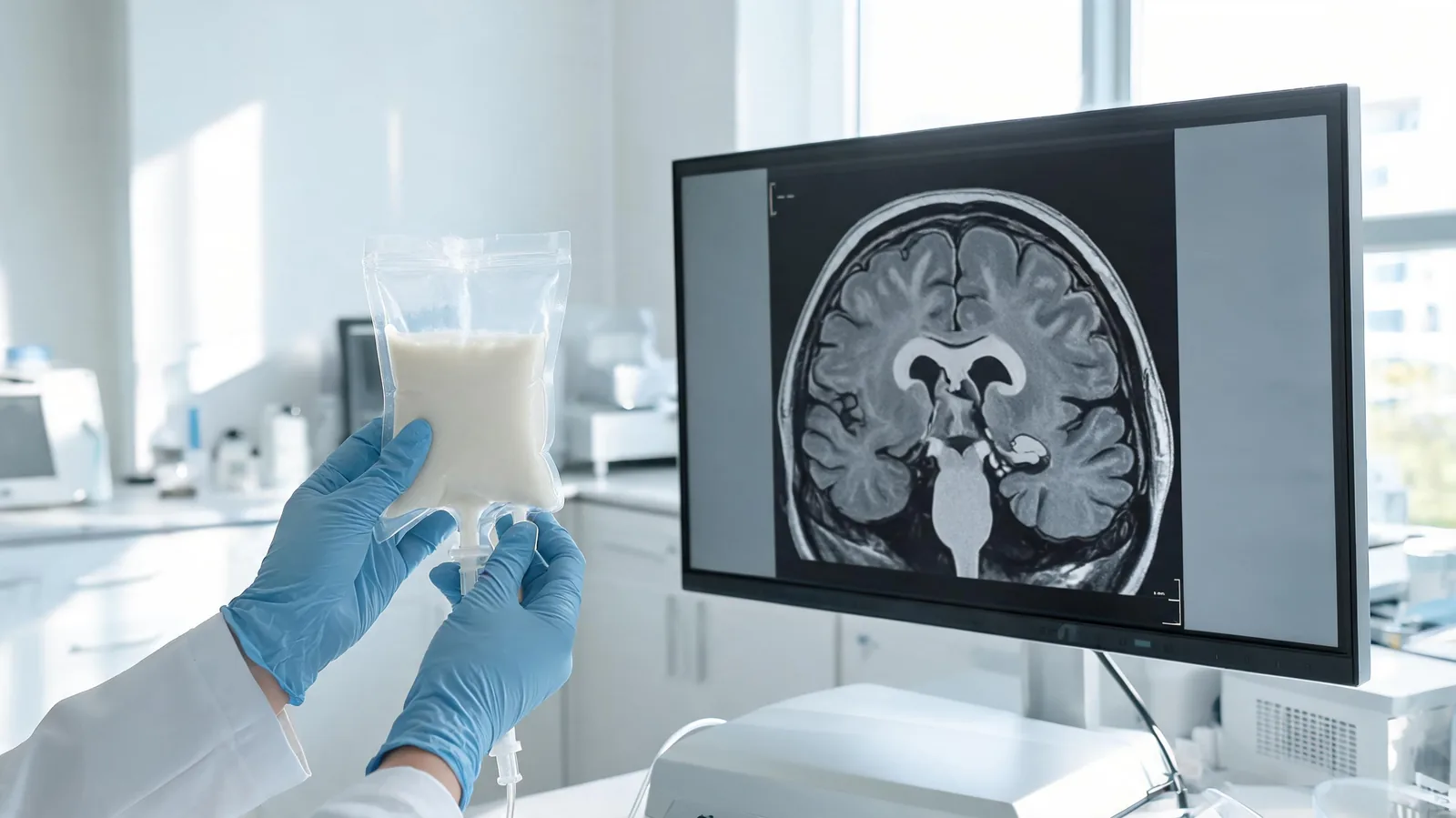
The poster released on 13 July 2026 examined brain inflammation with free water MRI. This imaging method measures how much water accumulates between cells because of inflammation or tissue damage; higher values are read as more neuroinflammation. An earlier analysis had shown that at week 39 free water in gray matter of the hippocampus, temporal, parietal and occipital lobes and the medulla was significantly lower in treated patients than with placebo.
In the new analysis, the effect was clearest in the hippocampus and temporal lobe, regions closely tied to memory. Patients whose free water stayed lower also tended to have better-preserved brain volume and better cognitive and quality-of-life scores. In white matter, free water rose over 39 weeks with placebo while treated groups were numerically lower, with differences in the fornix, sagittal stratum and uncinate fasciculus approaching statistical significance (p=0.058–0.064).
Blood markers pointed the same way. In the group given 25 million cells four times (12 patients), neurogranin, which reflects nerve cell damage, was lower at week 39 than with placebo (11 patients; p=0.023), and in the single 25-million-cell group (12 patients) the anti-inflammatory cytokine IL-13 was higher (p=0.043). Chief Science Officer Dr Joshua Hare said the results add support for the idea that the cell therapy stabilizes the brain's inflammatory environment.
What a 196-patient meta-analysis shows about mesenchymal stem cells
The meta-analysis, published online in Stem Cells and Development on 22 July 2026, was written by researchers at the Affiliated Hospital of Qinghai University and Guangzhou First People's Hospital. They searched for papers published up to March 2026, gathered six studies involving 196 people with Alzheimer's disease, and registered their plan in advance with PROSPERO.
The most notable finding was a dose-related difference. Patients given low-dose mesenchymal stem cells improved significantly more than with placebo on the ADAS-Cog cognitive scale (standardized mean difference -1.33) and the Mini-Mental State Examination, MMSE (standardized mean difference 2.59). Daily-living ability measured by ADCS-ADL also improved significantly overall (standardized mean difference 3.27), and two imaging studies observed slower hippocampal atrophy. When all doses were pooled, differences between studies were large and the cognitive difference was not clear, so the authors concluded that larger trials to find the right dose are needed.
A new trial combining cells with antibody treatment
In May 2026, the University of Miami Miller School of Medicine described an investigator-initiated clinical trial that adds a single intravenous infusion of mesenchymal stem cells for people with mild cognitive impairment or early Alzheimer's disease who are receiving lecanemab or donanemab. Led by neurologist Dr Barry Baumel, the trial examines whether an amyloid-clearing antibody and inflammation-calming cells can work together. The university noted that the earlier phase 1 trial of Lomecel-B met its safety endpoint with no treatment-related serious adverse events, and that cognition in the low-dose group improved or stabilized compared with placebo.
Safety and stage of research
According to the meta-analysis, mesenchymal stem cell treatment was generally well tolerated. Injection directly into the brain ventricles was linked to somewhat more temporary adverse events, while intravenous delivery was relatively less burdensome. Researchers managed these reactions by monitoring patients on a set schedule after treatment.
In terms of stage, Alzheimer bone marrow stem cell treatment has results up to phase 2a and is preparing for a phase 3 design. The AAIC analysis is an exploratory, after-the-fact look at a small trial, so the effects have been reported, not proven. Bone marrow stem cell research in another brain disease is described in our article on intravenous bone marrow stem cells for stroke.
Frequently asked questions
Do Alzheimer bone marrow stem cells replace existing medicines?
No. Current research mainly adds cells to existing treatment. The University of Miami trial also gives one extra cell infusion to patients on antibody treatment to see how the two work together.
Is laromestrocel made from the patient's own cells?
No. It is an allogeneic product grown from the bone marrow of young, healthy adult donors, so no marrow is taken from the patient and a prepared product is given intravenously.
Is Alzheimer's stem cell research done in Japan as well?
In Japan, cell-based treatment is carried out after its plan is reviewed under the Act on the Safety of Regenerative Medicine. Laromestrocel, covered here, is a product preparing for a phase 3 trial in the United States. Japan's system is summarized in our article on Japan's regenerative medicine rules.
Conclusion
Two reports from summer 2026 show Alzheimer bone marrow stem cell research moving toward a new target: neuroinflammation. In patients given bone marrow-derived mesenchymal stem cells, brain inflammation signals stayed lower, and in a 196-patient meta-analysis low-dose treatment raised cognitive and daily-living scores. Research is now moving on to a phase 3 trial and to trials combining cells with antibody treatment. Whether a treatment suits a particular patient, and what risks it carries, is for the treating medical team to judge.
This article summarizes published papers and conference materials. Names of universities, research institutions and companies identify the sources of research and are not introductions to or recommendations of any medical institution. Suitability of treatment is determined by the treating medical team.
Brain Disorders (Stroke, Parkinson's, Dementia, ALS, MS) →
References
- Longeveron Inc. Longeveron announces presentation of clinical data at the 2026 Alzheimer's Association International Conference (AAIC) that indicate its cellular therapy laromestrocel reduced neuroinflammation in patients with Alzheimer's disease. Press release, 2026-07-13 (AAIC 2026, London). https://s25.q4cdn.com/509659455/files/doc_news/Longeveron-Announces-Presentation-of-Clinical-Data-at-the-2026-Alzheimers-Association-International-Conference-AAIC-that-Indicate-Its-FIXN8.pdf
- Wen Y, Zhan S, Duan Y, Pang M, Yan J, Deng M, Fan H. Efficacy and safety of mesenchymal stem cell therapy for Alzheimer's disease: a systematic review and meta-analysis. Stem Cells Dev. 2026;35(15-16):277-289 (epub 2026-07-22). doi:10.1177/15473287261468404 https://doi.org/10.1177/15473287261468404
- University of Miami Miller School of Medicine (InventUM). Investigational stem cell therapy aims to stabilize Alzheimer's disease progression. 2026-05-11. https://news.med.miami.edu/stem-cell-therapy-alzheimers-clinical-trial-miami/
FTH Co., Ltd. (FTH) is not a medical institution. We provide overseas medical information guidance and translation and interpretation support for medical materials, and does not provide medical consultation, diagnosis, treatment or medical judgements.