The following is general information introducing research findings. Results reported in studies do not mean the same outcome for any individual, and most of these studies are small or early-stage.
Summary — Stem cell research for heart failure has entered everyday care in Japan. ReHeart (リハート), an iPS cell-derived cardiomyocyte sheet from Cuorips, a company that grew out of Osaka University, received a reimbursement price from Japan's Central Social Insurance Medical Council in July 2026, became covered by public health insurance on September 1, and the first transplant under insurance took place on September 29. Heartseed, a Keio University spin-off, presented 52-week results of the phase 1/2 trial of its iPS cell-derived cardiomyocyte spheroids HS-001 at ESC Congress 2026 in August, reporting that left ventricular ejection fraction (LVEF) was maintained or increased in all five patients of the high-dose group. This article summarizes where cardiac regenerative medicine stands, based on Japanese company, congress and media announcements from the past six months.
Heart failure and today's standard care
Heart failure (心不全) is a condition in which the heart cannot pump enough blood for the body, causing breathlessness, fatigue and swelling. Common causes include ischemic cardiomyopathy, where heart muscle has turned into scar after a heart attack, and dilated cardiomyopathy, where the heart enlarges without a clear cause. Standard care combines several classes of heart failure drugs, device therapy when needed (defibrillators, resynchronization), left ventricular assist devices and heart transplantation. Because lost heart muscle cells hardly regenerate, patients with severe disease that does not respond to drugs have needed new options. That is why Japan has invested heavily in producing large numbers of heart muscle cells from iPS cells (induced pluripotent stem cells) to replenish the heart. Earlier mesenchymal stem cell research is summarized on the heart failure stem cell page and in the heart and liver cirrhosis stem cell article.
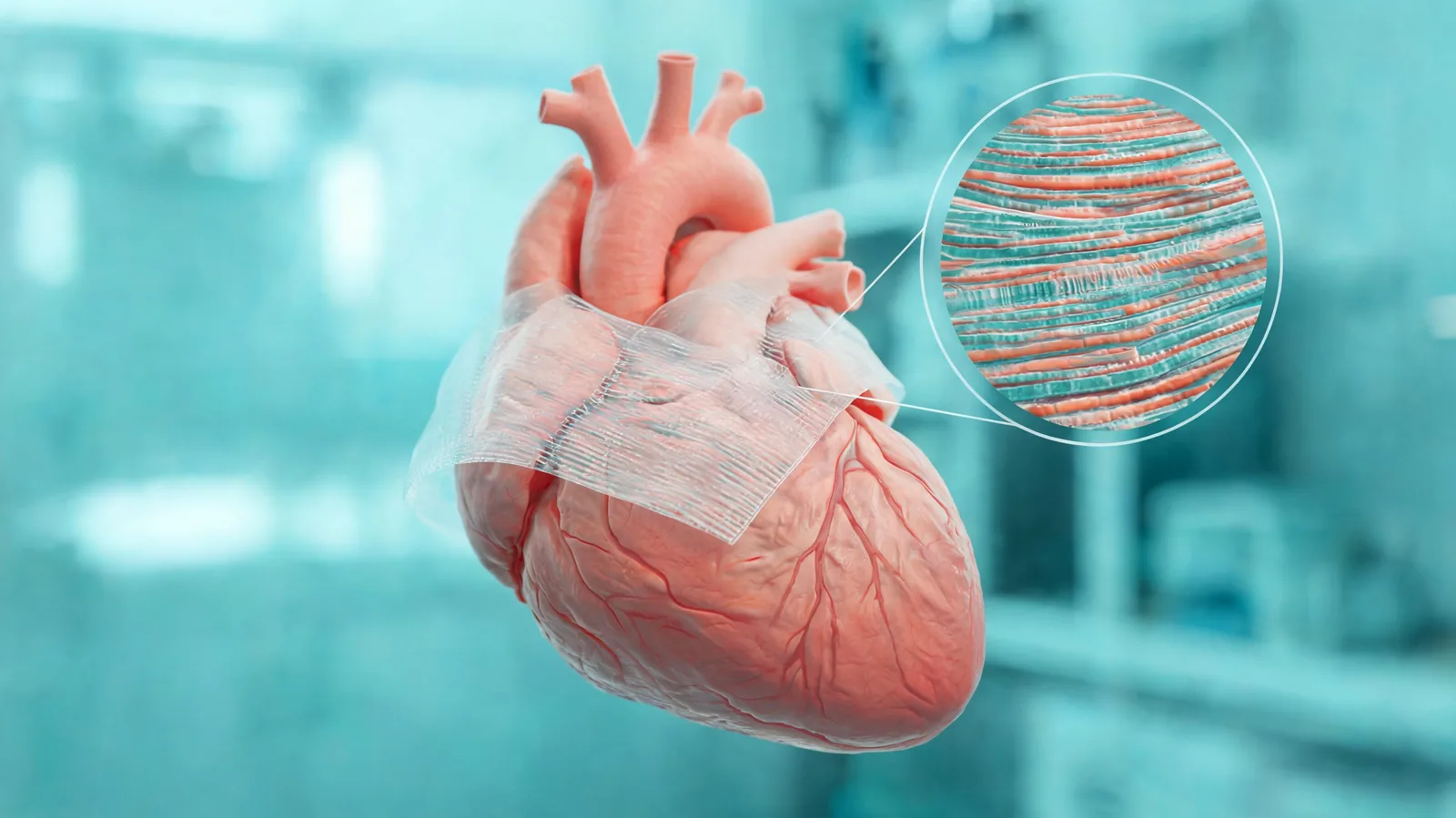
Heart failure stem cell product ReHeart — insurance coverage and first transplant
According to financial materials Cuorips published on August 13, 2026, ReHeart received conditional and time-limited marketing approval from Japan's Ministry of Health, Labour and Welfare in March 2026. It is an allogeneic product: heart muscle cells made from donor iPS cells are formed into a sheet and attached to the surface of the patient's heart. It is indicated for severe heart failure due to ischemic cardiomyopathy in patients for whom standard care, including drug and invasive treatment, is not sufficiently effective. The same document states that the Council's general meeting in July 2026 approved a reimbursement price of 53.2 million yen, with listing set for September 1, 2026.
The pharmaceutical newspaper Yakuji Nippo (October 6, 2026) reported Cuorips' announcement that the first transplant after insurance listing was performed on September 29 at a hospital in Osaka City and took about one hour. The company expressed hope that the product can become a new option for patients unlikely to recover with medical therapy. It shows a regenerative medical product made from iPS cells now being used in insured clinical care. Japan's conditional and time-limited approval system is explained in the Japan regenerative medicine timeline, and the iPS cell product for Parkinson's disease that gained coverage the same year in the Parkinson's disease stem cell article.
iPS cell-derived cardiomyocyte spheroids HS-001 — 52-week LAPiS results
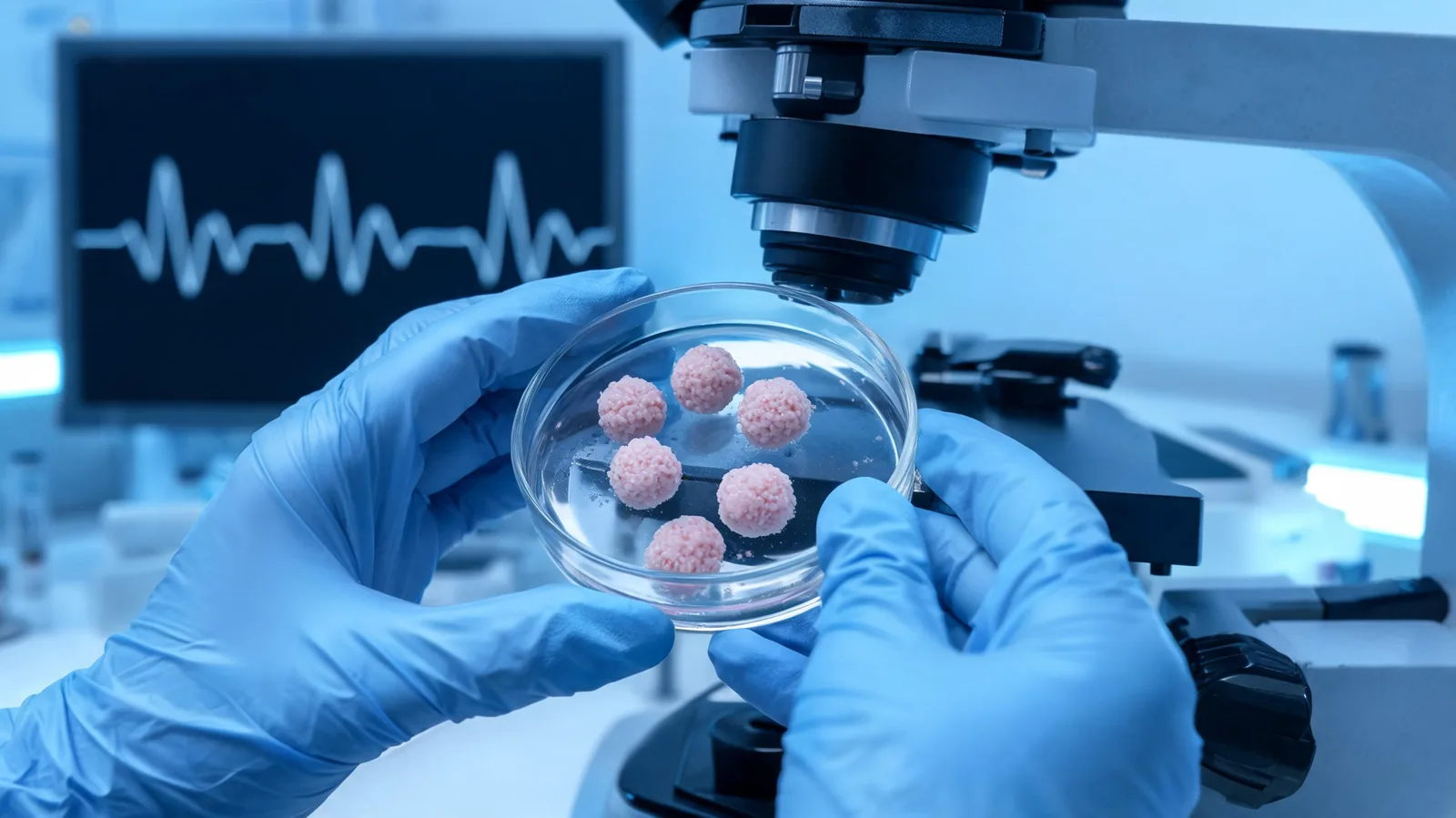
On June 1, 2026, Heartseed announced that analysis of the LAPiS trial was complete and that it plans to apply for marketing approval in Japan during 2026. On August 31 it presented 52-week topline results in an invited lecture at ESC Congress 2026 in Munich, Germany (August 28–31). LAPiS is a multicenter, open-label, dose-escalation phase 1/2 trial in Japan for severe heart failure due to ischemic heart disease. Spheroids are injected directly into the heart muscle during surgery; five patients received a low dose (50 million cardiomyocytes) and five a high dose (150 million). The primary endpoint was safety to 26 weeks; secondary endpoints were safety and efficacy to 52 weeks.
Heart function and quality-of-life measures
By site assessment, mean LVEF rose from 25.0% to 31.0% in the low-dose group and from 22.7% to 31.2% in the high-dose group. LVEF was maintained or increased in 4 of 5 low-dose and 5 of 5 high-dose patients. The left ventricular end-diastolic volume index (LVEDVI), a measure of heart enlargement, fell from 141.1 to 122.2 mL/m² and from 134.5 to 119.2 mL/m², and was maintained or reduced in 4 of 5 patients in each group. In the high-dose group, the mean KCCQ-OS symptom and quality-of-life score rose from 75.8 to 95.5 points and mean six-minute walk distance from 462.6 m to 500.2 m. New York Heart Association (NYHA) class was maintained or improved by at least one class in all 10 patients.
Safety and management
According to the company, there were no ventricular arrhythmias lasting 30 seconds or longer or requiring treatment, and no safety concerns affecting its approval plans were identified. Because donor cells are used, three immunosuppressive drugs were given for a period; one patient developed shingles during that time, which resolved with treatment. Details will be released at congresses and in a paper.
A catheter-based trial without opening the chest has also begun
According to Kyodo News (June 12, 2026), Heartseed has started a phase 1/2 trial (EMERALD, development code HS-005) delivering spheroids by catheter without opening the chest. A catheter inserted through a blood vessel at the groin delivers about 150 million heart muscle cells from inside the heart; the company describes it as the world's first such method that needs no open-chest surgery. The first patient, a man in his 70s with dilated cardiomyopathy, received the transplant in late March at Shinshu University Hospital and was reported to be doing well. The plan is to treat 14 patients over two years — 7 with dilated cardiomyopathy and 7 with ischemic heart disease. A less invasive method may widen options for older patients who cannot tolerate surgery.
Study stages and how to read the results
ReHeart has conditional and time-limited approval and is now used in insured care, with post-marketing data being collected for confirmation of efficacy and safety. HS-001 results come from a 10-patient phase 1/2 trial without a control group and open-label design, so the numbers are best read as changes within the same patients before and after treatment. HS-005 is an early trial in which the first patient has been treated. 'Improvement was reported' differs from benefit being 'proven' for every patient, and data from more patients continue to accumulate.
Frequently asked questions
Which patients are candidates for heart failure stem cell therapy?
ReHeart is approved for severe heart failure due to ischemic cardiomyopathy when standard care is not sufficiently effective. LAPiS enrolls patients with ischemic heart disease, and EMERALD patients with ischemic heart disease or dilated cardiomyopathy. Whether it suits an individual is decided by the treating physicians based on the heart and overall condition.
How do iPS cardiomyocyte sheets differ from spheroids?
A sheet is a thin layer of heart muscle cells surgically attached to the outer surface of the heart. Spheroids are small balls of heart muscle cells injected directly into the heart muscle or delivered from inside the heart by catheter. Both use cells made from donor iPS cells, so immunosuppressive drugs are given alongside.
How is this different from mesenchymal stem cell research?
Mesenchymal stem cells from bone marrow and other tissues are expected to act indirectly, mainly through secreted factors that reduce inflammation and support blood vessel formation. iPS cell-derived cardiomyocytes aim to replenish contracting heart muscle cells themselves to support the heart's pumping function.
Conclusion
In heart failure stem cell research, Japan took several steps in a single year: insurance coverage and the first insured transplant of an iPS cell-derived cardiomyocyte sheet, favorable 52-week phase 1/2 results for cardiomyocyte spheroids, and the start of a catheter-based trial. Cardiac regenerative medicine is gradually becoming a real option for patients with severe heart failure. Suitability and risks are judged by the treating physicians, and we will update this summary from the original sources when approval applications and papers are published.
This article summarizes published company announcements, congress presentations and media reports. Names of companies, universities and medical institutions are given to identify sources and do not introduce or recommend any medical institution. Suitability of treatment is decided by the treating physicians.
References
- Heartseed Inc. 52-Week Topline Results of Phase I/II Clinical Trial (LAPiS study) for Allogeneic iPS cell-derived Cardiomyocyte Spheroids (HS-001) Presented in Invited Lecture at ESC Congress 2026 (press release). 2026-08-31. https://heartseed.jp/en/news/assets/2026/08/%E3%82%A6%E3%82%A7%E3%83%96%E3%82%B5%E3%82%A4%E3%83%88%E6%8E%B2%E8%BC%89%E7%94%A8_52-week%20topline%20results%20of%20Ph1_2%20clinical%20of%20LAPiS%20study%20presentedat%20ESC%20Congress%202026_final.pdf
- Heartseed株式会社. 他家iPS細胞由来心筋球(HS-001)の第1/2相治験(LAPiS試験)における52週トップライン結果を、ESC Congress 2026の招待講演にて発表. 2026-08-31. https://heartseed.jp/news/assets/2026/08/b8af9c4bbc2cb3583655085e2067640f1b13730b.pdf
- Heartseed株式会社. LAPiS試験の解析結果に関するお知らせ(適時開示). 2026-06-01. https://www2.infomart.co.jp/web/jp/images/upload/3719/140120260528553517_23025680.pdf
- クオリプス株式会社. 2027年3月期 第1四半期決算短信〔日本基準〕(連結). 2026-08-13. https://finance-frontend-pc-dist.west.edge.storage-yahoo.jp/disclosure/20260813/20260813519102.pdf
- 薬事日報. 【クオリプス】保険収載後初の移植手術‐iPS心筋細胞シート. 2026-10-06. https://www.yakuji.co.jp/?p=140002
- 共同通信(秋田魁新報). 開胸不要のiPS心筋治験を開始 心不全患者にカテーテルで移植. 2026-06-12. https://www.sakigake.jp/news/article/20260612CO0127/
- Heartseed. iPS細胞由来心筋球®のカテーテル投与治験(EMERALD試験)で1例目の実施を発表. 2026-06-12. https://www.zaikei.co.jp/releases/3476646/
FTH Co., Ltd. (FTH) is not a medical institution. We provide overseas medical information guidance and translation and interpretation support for medical materials, and does not provide medical consultation, diagnosis, treatment or medical judgements.